
Corporate reputation: how can businesses get it right?
In an increasingly competitive market, organisations with a robust reputation can stay one step ahead of their competitors. Reputation is more than just clever communication management; there are various factors that impact a business’ reputation. Regine le Roux, Managing Director at Reputation Matters shares insights into what it takes to take an organisation’s reputation to the next level.
Firstly, why is it important to know what your reputation is, and to improve it? Ultimately it is about improving your business so that you can attract top talent, deliver a unique product or service that people want to invest in and ultimately to grow the business and positively contribute to the economy of a country.
Part of the reputation management process is to build solid relationships with your key stakeholders, which may include employees, clients, investors, government and the media, to name a few. “Each of these stakeholders perceive the business differently and understanding stakeholder concerns can be quite complex. For this reason, reputation research is key for businesses to continuously grow,” says le Roux.
In order for companies to understand their reputations, Reputation Matters has developed a unique measurement tool, the Repudometer®. With this tool, organisations are armed with vital research that allows them to accurately adapt their business and communication strategies to all key stakeholders’ requirements. “With the Repudometer® we are able to scientifically measure and quantify an organisation’s reputation. It allows us to see what is positively or negatively impacting its reputation.
There are five core elements that make up a business’ reputation and it is critical that attention is given to all of them,” mentions le Roux.
These five core elements include:
- Corporate Management – How is the organisation run and managed?
“It is very important that all stakeholders know what the vision and mission of an organisation is and whether it is being upheld. The effectiveness of policies, procedures and leadership is also a key focus area for when measuring an organisation’s reputation,” explains le Roux.
- Corporate Capital – Does the business have the right resources?
“An organisation’s employees play an important part in the success of a business. Any business owner needs to ensure that they have the right people on-board with the right tools to achieve business goals,” reiterates le Roux.
- Corporate Positioning – How is the organisation positioning itself in the industry?
Le Roux indicates that strategic alliances, i.e. who you are partnered with; should be carefully chosen. By association, a partner’s values and reputation will affect your own. Similarly, Corporate Social Investment (CSI) initiatives should not be done merely for the sake of it, and needs to be sustainable and form part of the organisation’s overall strategy.
- Corporate Performance – What is the organisation’s perceived market performance?
“It is common knowledge that business results, such as share price and future viability, influence shareholder perceptions. A business’ products and / or services should also be of a high and competitive standard,” shares le Roux.
- Corporate Dialogue – How do you communicate with your stakeholders?
Le Roux emphasises that communication is the essence of reputation and the glue that binds the other four elements together. Both internal and external communication are imperative to building a strong reputation.
“Any business will know that reputation does matter. Without research, will you know what perceptions your stakeholders have of your organisation, and where to start building your reputation to take it to the next level?” concludes le Roux.
For more information on managing and investing in your reputation, visit www.reputationmatters.co.za or call +27 (0)11 317 3861. Reputation Matters is also on Facebook www.facebook.com/yourreputationmatters and Twitter @ReputationIsKey.

Deep-sea trawl operators and WWF-SA team up to tackle fishy issues
The South African Deep Sea Trawling Industry Association (SADSTIA) has teamed up with conservation organisation, WWF South Africa (WWF-SA), to dramatically improve the management of at least 12 non-target fish species that are caught alongside hake in the offshore demersal trawl fishery.
SADSTIA’s members are the trawler owners and operators that deliver hake to fish and chip shops in every corner of South Africa; process and package fish fingers and other popular hake products for local supermarkets; and also supply a demanding international market with a range of value-added hake products.
For the next three years, SADSTIA will work with WWF-SA to implement the South African Offshore Trawl Bycatch Fishery Conservation Project (FCP) which will undertake research, implement practical actions, and generally improve the environmental performance and sustainability of the fishing activity of SADSTIA’s members, with a particular focus on non-target species management.
The non-target species are kingklip (Genypterus capensis), monkfish (Lophius vomerinus), angelfish (Brama brama), Cape dory (Zeus capensis), gurnard (Chelidonichthys capensis), horse mackerel (Trachurus capensis), jacopever (Helicolenus dactylopterus), octopus (Octopus vulgaris), panga (Pterogymnus laniarus), ribbonfish (Lepidopus caudatus), snoek (Thyrsites atun) and a number of skate species.
Although these species are collectively referred to as “non-target species” or “by-catch”, they are retained and processed by trawl operators and many of the lower value species, for example panga, snoek and angelfish, are valued as a source of good quality animal protein by lower income groups, particularly in the Western Cape.
In spite of their importance, the management of these species has traditionally taken a backseat to the Cape hakes (Merluccius paradoxus and M. capensis) that are the target of the deep-sea trawl fishery. The hakes are certified as sustainable and well managed by the Marine Stewardship Council (MSC) and these species are the only ones in Africa to have achieved this status.
Although the objective of the FCP is to fundamentally improve the management of the deep-sea trawl fishery as a whole, an intended spin-off for SADSTIA and its members is that certain species are anticipated to move off the Red-list or Orange-list of the Southern African Sustainable Seafood Initiative (WWF-SASSI) and towards a WWF-SASSI Green-listing.
As Tim Reddell, chairman of SADSTIA and director of Viking Fishing explains, improved WWF-SASSI ratings will substantially enhance the image of SADSTIA which has done so much to improve its environmental footprint.
“It is 12 years since the South African trawl fishery for hake was first certified as sustainable and well managed by the MSC and in that time the industry has more than lived up to the conditions of certification. This latest partnership with WWF-SA is another important step towards improving the environmental footprint of the fishery. We have to pay attention to these non-target species and improve their management,” he says.
The FCP is based on the findings of a Responsible Fisheries Alliance (RFA) funded project aimed at understanding how best to improve the sustainability status of bycatch species in the hake offshore demersal trawl fishery. Jessica Greenstone, the WWF-SA Marine Science and Policy Lead who compiled the initial RFA report and played a key role in developing the FCP, noted, “This is an exciting step towards implementing an ecosystem approach to fisheries management in the deep-sea trawl sector. A number of fish species that are part and parcel of the fishery will finally be given the attention they deserve through at-sea monitoring of total catches and scientific assessments of their stock status. This project also highlights the synergies of industry, government and civic organisations working together to accomplish more than anyone could alone.”
While the FCP is underway, an “Improvement Icon” will be used by WWF-SASSI to indicate that an improvement project is underway for the main non-target species caught in the deep-sea trawl fishery. This will ensure that WWF-SASSI participating retailers, restaurants and suppliers who have made commitments to sustainable seafood and supporting fisheries under improvement can easily identify which species are part of this FCP. Consumers will also be able to easily access this information as the “Improvement Icon” will be used on the main WWF-SASSI public facing tools, including the WWF-SASSI Pocket Cards, Posters and Website.
SADSTIA will play a pivotal role in the FCP and to some extent, the success of the project will come down to the ability of skippers and fishing crews to adapt to new on-board routines and practices. For instance, the skippers and fishing crews who work on the 53 trawlers that are participating in the project (27 fresh fish vessels and 26 freezer vessels) will be required to change the way they log and report catches. The goal is to ensure there is better recording at drag level and that catches are sorted, accurately tallied and reported. Such information will help scientists at the Department of Agriculture, Forestry and Fisheries to extract accurate catch data for each of seven priority non-target species and, in time, the top 12 non-target species landed by the fishery.
WWF-SA welcomes the willingness of the various stakeholders to collaborate on this FCP.
John Duncan, WWF-SA Marine Programme Senior Manager, commented: “More often than not, there are practical solutions to many of the challenges facing our oceans, but we’re only going to solve them by sitting down and figuring them out together. This project is a great example of this and it’s exciting to see the shift in mindsets from all involved.”
Reputation Matters’ MD a finalist in this year’s BWA Regional Business Achiever Awards
 Reputation Matters is thrilled that Managing Director and corporate reputation specialist Regine le Roux is a finalist in this year’s Businesswomen’s Association (BWA)’s Regional Business Achiever Awards (RBAA) in the Entrepreneur Category.
Passion, diligence and confidence are some traits that make successful entrepreneurs stand out from the crowd. With integrity, always in all ways, le Roux is proof that hard work and dedication leads to success.
A determined business owner based in Cape Town, le Roux started her entrepreneurial career eleven years ago when she saw a gap in the communication industry. “Public Relations is often seen and hoped to be a ‘silver bullet’ to fix a reputation,” says le Roux. “However there is a lot more to building reputations than a press release. With our Repudometer®, a scientific research tool that we’ve developed and refined over the last decade, we are able to pinpoint exactly which part of the business is building or breaking down an organisation’s reputation. From the results we then work very closely with the organisation’s leadership teams, such as the CEO, Communication or Human Resources’ Directors to put strategies and plans in place to build and enhance their reputations,” adds le Roux.
Reputation Matters has successfully positioned itself as the reputation research partner of choice for corporates. “Customisation is important; even though we have a set methodology, we make sure that we add questions which relate specifically to our clients and their needs.”
With offices in Cape Town and Gauteng, the dedicated team plays a very important role in the success of Reputation Matters. “I am incredibly grateful for our high calibre team measuring and fostering organisations’ reputations,” mentions le Roux.
Annually the BWA’s RBAA recognises and honours businesswomen in six categories, namely: emerging entrepreneur; entrepreneur; social entrepreneur; professional; corporate and government. The final judging for the Western Cape region will take place on Tuesday, 24 May 2016 and the winners will be announced at a gala dinner on Thursday, 28 July 2016.
“Our Regional Business Achiever Awards evening is our flagship event at which women who are blazing a trail in business are honoured. These awards fulfil another important role, namely proving what can be achieved notwithstanding the difficulties facing women in business. This year we are privileged to have Ruda Landman as our keynote speaker; a woman who herself is a powerful role model to women and we are excited to hear her insights,” says Robyn Hey, Chair of the Cape Town Chapter of the Businesswomen’s Association of South Africa.
“I am honoured to be a finalist in a category with such strong contenders,” says le Roux. “All the finalists that have been selected are inspiring businesswomen.”
Reputation Matters is an established thought leader in reputation management; approached regularly by national and local media houses for interviews and inputs. Reputation Matters has also been involved in a number of international engagements. Le Roux recently published her first book, ‘Reputation Matters, Building blocks to becoming the business people want to do business with,’ highlighting the key dimensions to building a strong organisational reputation.
For more information on Reputation Matters, please visit www.reputationmatters.co.za or call 021 790 0208. Reputation Matters is also on Facebook www.facebook.com/yourreputationmatters and Twitter @ReputationIsKey.
NCVT celebrates National Child Protection Week
Child activists and communities in South Africa are gearing up to commemorate National Child Protection Week, celebrated from 27 May to 02 June 2016. In line with this year’s theme, ‘Children’s Rights and Responsibilities’, the National Children and Violence Trust (NCVT) will collaborate with the National Prosecuting Authority (NPA), the South African National Council On Alcoholism And Drug Dependence (SANCA), the South African Drug and Anxiety Group (SADAG) and non-profit organisation, Childline to help create awareness about children’s rights, responsibilities and the effects of substance abuse on minors. These organisations will celebrate with community members living in and around Cosmo City, Diepsloot, Fourways and Lanseria.
Nkosi Johnson, South Africa’s famous child AIDS activist, who died at the age of 12 once said: “Do all you can with what you have, in the time you have, in the place you are.” At such a young age, Johnson took responsibility for all those living with HIV/AIDS by doing all that he could, with the time that he had to advocate for children’s rights. This year’s theme calls for children to be mindful of their rights and positively influence their peers.
“Children have rights and are also expected to take ownership of these rights through responsible behaviour in their community, school and at home,” says NCVT Senior Social Worker, Nokwazi Dlamini. “At NCVT, we support vulnerable groups such as abused and violated women and children; the unemployed; and people infected and affected by HIV and AIDS in any way that we can. This includes educating them about their rights,” adds Dlamini.
NCVT, together with NPA, SADAG, SANCA and Childline, will be hosting awareness campaigns on children’s rights and responsibilities at different schools across Gauteng. Guests will be entertained by NCVT’s Youth Choir and food and drinks will be provided. The events scheduled to take place include:
- A motivational talk by NCVT Social Worker, Chido Goteka on Friday, 27 May 2016 at Witkoppen Primary School, Fourways.
- An inspirational talk by NCVT Social Worker, Nokwazi Dlamini on Monday, 30 May 2016 at Bassa Primary School, Diepsloot.
- A dramatic play depicting the rights and responsibilities of children performed by Nooitgedacht Primary School learners in Lanseria on Monday, 01 June 2016; followed by a cheering talk from NCVT Social Worker, Chivimbiso Mutibwichi.
- A closing inspirational talk by NCVT Social Worker, Judith Mthombeni on Tuesday, 02 June 2016 at Far North High School, Cosmo City.
During the events, NCVT plans to launch their bright new logo which represents children’s freedom of expression and their right to live in a safe and happy environment, together with their loved ones. “Our new logo is a reminder of NCVT’s role in the lives of vulnerable groups, especially minors. It highlights the importance of working together as a community in order to achieve our common goal of social cohesion,” says Dlamini.
“Children’s rights shouldn’t go unnoticed within societies. As adults, we need to listen to the needs of our children. Their voices matter and should constantly echo in our hearts so that we can achieve a safe and free environment for all,” concludes Dlamini.
To make donations to NCVT or volunteer, members of the community can contact ncvtprojects@iafrica.com | +27 11 705-1960 | +27 11 467 4936. For more about NCVT, please visit www.ncvt.co.za.
Youngsters visit animal farm in Philippi
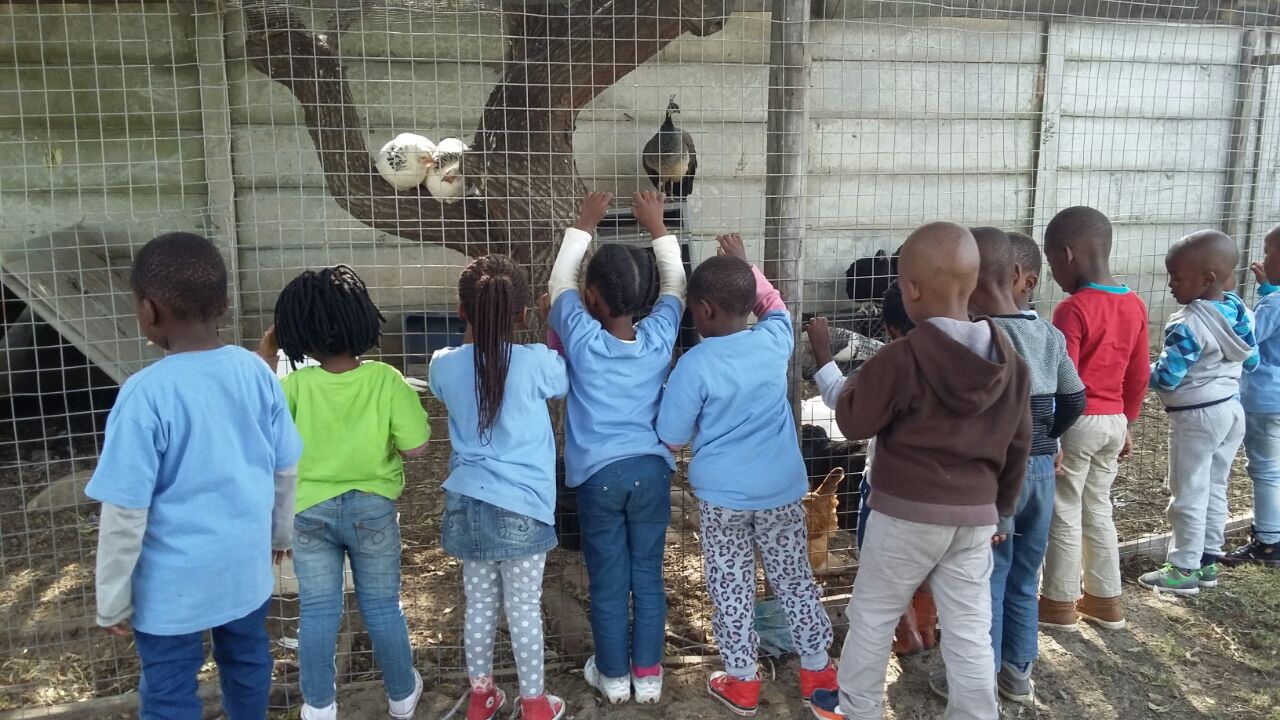
Caption: Learners from Mustadafin Foundation’s Early Childhood Development (ECD) Centres in Cape Town, were in for a fun-filled and educational day as they visited Adventure Farm in Philippi today, 12 May 2016. The Foundation’s four ECD Centres located in Delft, Khayelitsha (Site B and S-Section) and Manenberg went on the daytrip. The 226 lively children aged between two and six years old spent the day learning about all the animals looked after on the farm.
“It was a lovely day for the young learners to be outside – just before the cold winter sets in on Cape Town,” says Ghairunisa Johnstone-Cassiem, Director at Mustadafin Foundation.
The non-profit organisation’s ECD pupils spent the day frolicking in the sun at Adventure Farm based in Philippi. Adventure Farm is a children’s farmyard and has a large variety of animals, including miniature ponies and horses which the children could ride on. The learners explored the farm and even had a chance to pet some of the animals. They were taught where the animals came from, what they eat and the importance of caring and looking after the environment. Nutritious snacks and cold drinks were provided at lunchtime to keep the children’s’ energy levels high.
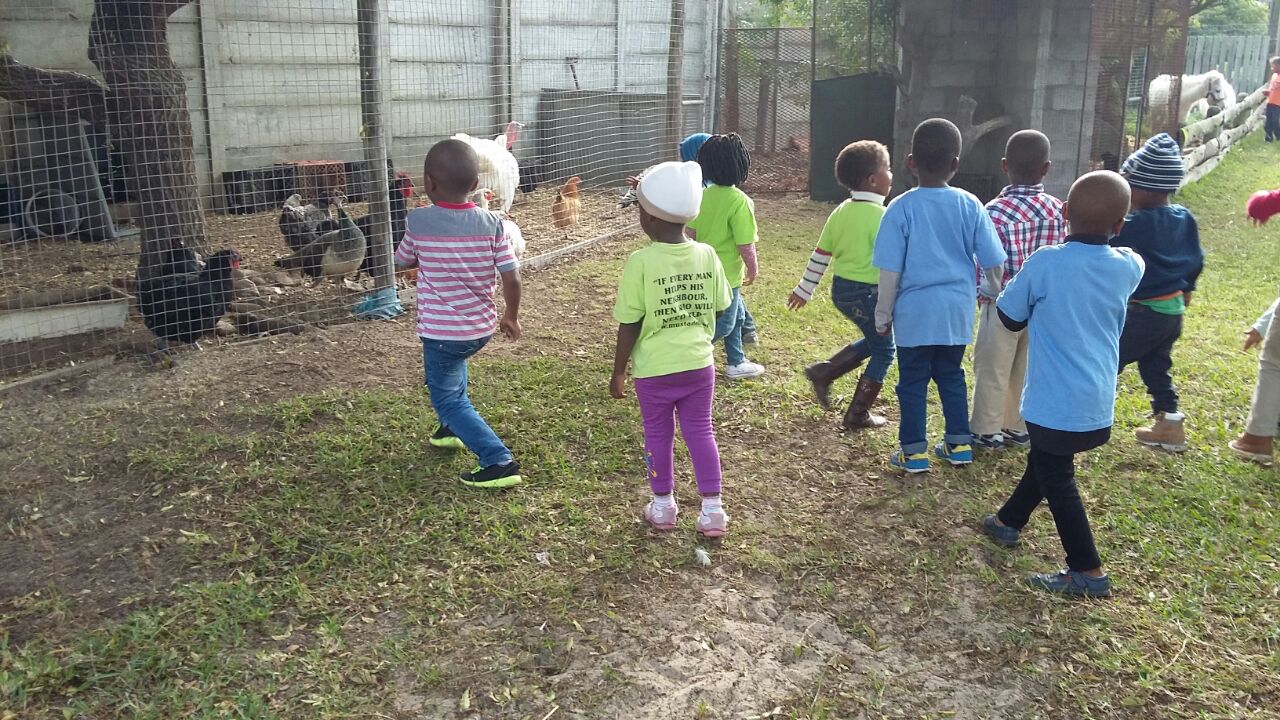
“As part of our holistic approach, we run various excursions for the ECD learners throughout the year with the goal of teaching them in a fun environment. It was a wonderful experience for the children; for most of them, it was their first visit to an animal farm,” says Johnstone-Cassiem. “This outing is a chance for the children to be entertained in a safe environment and also a wonderful opportunity for them to interact and learn about all sorts of living creatures.”
For more information about the Foundation and how you can donate or volunteer, please visit www.mustadafin.org.za or contact 021-633-0010. Mustadafin Foundation is also on Facebook www.facebook.com/MustadafinFoundation.
Reputation research – the springboard to corporate success
Building a solid corporate reputation is key to stand out from the crowd. Award-winning reputation management firm, Reputation Matters, shares the importance of conducting research to take your business’ reputation to the next level.
Founder and Managing Director of Reputation Matters, Regine le Roux, says, “What does it take to build a good reputation? That is the million-dollar question; unfortunately, there isn’t a silver bullet solution. How would you feel about being able to measure your reputation and know exactly what area of your business is impacting it? You may already have a gut feeling of what needs to be done; however, presenting facts and figures to your board that is based on solid research is going to have a much greater impact.”
Reputation research is the logical first step to help you identify and understand current perceptions of the organisation. “This will in turn enable you to pinpoint and bridge gaps; ultimately helping you to build a solid corporate reputation,” adds Le Roux.
Reputation Matters has become a leader in corporate reputation management in South Africa. With a dedicated team in Cape Town and Johannesburg, the organisation prides itself on their unique reputation measurement tool, the Repudometer®. The tool statistically measures an organisation’s reputation, giving organisations an actual percentage of what their current reputation is.
“With our unique reputation measurement tool, you’ll be able to have a greater insight into your reputation and what makes your stakeholders tick. You’ll know exactly which part of your business is building or breaking down your reputation and we will also provide you with recommendations on how best to take it to the next level,” elaborates Le Roux.
Le Roux mentions that there are various elements that make up an organisation’s reputation and that there needs to be consistency and balance when dealing with these. The glue that keeps everything together is communication.
The possibilities of a good and solid reputation are endless. “A healthy corporate reputation helps you attract and retain talented employees. It also assists in making your brand the most preferred amongst customers when competitors’ goods and services are available at a similar quality and price. And very importantly, it pulls you through times of controversy – you don’t know when a crisis is about to hit,” adds le Roux.
Last year, Reputation Matters celebrated one decade of looking after corporate reputations. In celebration, they hosted an inaugural reputation conference with top class international and local speakers who shared best practices on reputation management.
“You can be consistently good consistently bad, either way you are building yourself a reputation. Never underestimate the importance of research to help build and maintain a good, solid and healthy corporate reputation,” concludes Le Roux.
For more information on Reputation Matters, please call 021 790 0208. Reputation Matters is also on Facebook www.facebook.com/yourreputationmatters and Twitter @ReputationIsKey.
Beat the cold this winter
The Western Cape is gearing up for what is expected to be a cold and wet winter. The Mustadafin Foundation urges residents living in informal settlements to be safe (and dry) this winter season.
The Western Cape, much like the other provinces, is in dire need of rain. However, those living in impoverished areas should be prepared for when the rainy season starts.
“We realise the devastating implications of the rainy season on those less fortunate; homes are damp and wet, diseases spread quickly and houses can be ruined in minutes. Mustadafin Foundation calls on all residents to gear up for the winter season, and be prepared to keep warm and dry,” says Ghairunisa Johnstone-Cassiem, Director at Mustadafin Foundation. The Foundation provides disaster relief to impoverished areas and also distributes hot food and blankets in the Western and Eastern Cape as part of their annual winter warmth project.
“Our project teams have already started distributing warm clothes, food and blankets in the Western and Eastern Cape areas. In Beaufort West alone, we have impacted five areas with over 4 000 residents,” explains Johnstone-Cassiem.
In addition to food and clothing, the non-profit organisation also assists with water distribution in the drier areas for drinking and washing purposes. “In total, we have received over 15 tons of water donations from Libstar Chamonix in Franschhoek, Woolworths and Meadowridge Primary School in Mitchells Plain. We would like to thank these organisations for their contribution – it is making a huge difference in areas where water is a scarce commodity,” says Johnstone-Cassiem.
A 70 year old resident in Tafelsig, Mitchells Plain, says, “It’s the thought that counts, because not everyone thinks of the elderly in winter. People tend to look the other way. It’s no use complaining. But then we find organisations such as Mustadafin that go the extra mile and give us a warm, decent blanket and a meal to fill our stomachs.”
“It is heartfelt to witness what a simple blanket can do for a person. Often, they have nothing else to help keep them warm,” mentions Johnstone-Cassiem. “Our volunteers and employees have worked tirelessly to tend to those in severe need of winter warmth assistance”.
For residents living in informal settlements, Johnstone-Cassiem has the following tips to stay warm, dry and safe this winter season:
- Block all cold drafts coming in your home by covering openings of doors and window sills with blankets.
- Fix all roof leaks timeously.
- Layer up with clothing – a plastic bag or newspapers inside your jacket works wonders to keep you warm. Plastic bags can also be worn over your clothes for when it rains.
- Half fill a hot water bottle before going to bed – it keeps the water warmer for longer when it is not filled to the brim.
- Move your bed away from the wall slightly – this will help keep cold air away from you.
- Do not drink alcohol as it drops core body temperature.
- Use sandbags around your home when it rains to keep water from entering your house.
- Never leave a fire unattended and ventilate your home if you do use fire for heating or cooking.
- Try to eat nutritious, warm food such as soup.
- Exercise – by staying active you will keep warm and it also assists with your overall health.
“We call on all Capetonians to assist this winter and make a difference in communities by donating clothing and blankets or by volunteering,” concludes Johnstone-Cassiem.
Mustadafin Foundation distributes warm nutritious meals, blankets and second hand clothing to destitute communities in the Western Cape as part of their winter warmth initiative. If you would like to join this initiative and ensure those in need are warm and dry this winter please donate quality second- hand clothing or sponsor a hot pot of food.
For more information, to donate or volunteer call Mustadafin Foundation on 021 633 0010 or visit their website at www.mustadafin.org.za.
WGSN, the world leading trend authority, continues to drive business growth in Africa with launch of Cape Town office

Caption: With a growing presence in Africa, WGSN today announced the launch of their Cape Town Africa head office located at the contemporary space, Ideas Cartel. Pictured above is WGSN Regional Director for Africa, Hannari Slabbert at the Cape Town office space. Photographer: Kikitography [High resolution picture available on request].
WGSN, which was founded 18 years ago, has 14 offices globally and has already been operational in Africa for the past ten years with over 70 clients, including leading retailers and suppliers in South Africa.
As part of the unveiling of the new Cape Town office, WGSN will host an exclusive VIP engagement with key industry players in Cape Town on 18 April. Their African clients can look forward to expert advice when Head of Fashion at WGSN, Catriona Macnab makes her weeklong roadshow in Cape Town, Durban and Johannesburg for an inside look at seasonal trends. Macnab, an esteemed creative forecaster based in London, has been part of the WGSN team for twelve years and together with her team provide fashion and design companies with exclusive trend advice regarding colour, fabric and style. A series of trend seminars across Africa will also be hosted this year.
When it comes to fashion and creativity trends, WGSN is leading the pack. The global trend authority provides fashion and lifestyle forecasting, data analytics and expert consultation to their broad client database all across the globe. WGSN is relied upon by more than 6,000 clients, including 95% of Fortune 500 apparel companies, as well as some of the world’s most creative and innovative businesses from multinational brands to independent designers.
WGSN Regional Director for Africa, Hannari Slabbert said, “We are ecstatic to have opened our offices in Cape Town. Africa, with its unique people and creative minds, is an emerging market and the logical next step for WGSN to expand our services. Fashion and creative minds from the continent are already creating a buzz in the industry with designers and brands featured all over the world.”
In May 2015*, it was reported that sub-Saharan Africa’s apparel and footwear market was worth $31 billion, making WGSN’s entry into the continent a logical one as it increases its foothold in a growing market. With WGSN’s official launch into Africa, fashion houses, retailers and buyers will be able to stay on trend in a rapidly changing industry.
Jose Papa, CEO of WGSN said, “Africa is a hub of creativity and full of growth. The investment in our first office in Africa signals our belief, as the world’s leading trend forecaster, that Africa will play a bigger part in the future globally. The fact that large international fashion retailers are also extending their presence in the continent, makes this the ideal time for us. We’re hugely excited to see the African market grow and to be a part of that.”
WGSN’s experts provide deep insight and analysis of consumer, fashion and designer trends, to ultimately assist clients with their planning. The trend authority will offer their full range of services to those operating in the fashion and creative space in Africa. These cover online trend services for fashion, lifestyle and interiors; retail data analytics; crowd-sourcing design validation; and expert consulting.
If you would like to engage with WGSN in Cape Town, please contact Hannari Slabbert on +27 (63) 669 7438. For more information on WGSN, visit www.wgsn.com.
*Euromonitor, May 2015
Street children: Five warning signs of a child’s desperate cry for help before hitting the streets
According to Missing Children South Africa, one South African child goes missing every five hours.* The missing child could either be trafficked or will find solace in the streets of South Africa. This International Day for Street Children, commemorated on Tuesday, 14 April 2016, the National Children and Violence Trust (NCVT) implores communities to join forces in providing a safe and conducive environment for children. NCVT supports vulnerable groups such as abused and violated women and children; the unemployed; and people infected by the human immunodeficiency virus and acquired immune deficiency syndrome (HIV/AIDS).
This year marks the sixth International Day for Street Children and the NCVT pleads with communities to restore community social culture and cohesion by ensuring children’s basic rights are at the forefront of community safety. With over 15 million South African children under the age of 14, and 5.6 million of them being under the age of four years old**, it is in the hands of families and communities to ensure that children of all ages do not resort to the streets as a desperate measure to avoid morbid domestic challenges at home. “Children are our future leaders, educators and doctors after all,” says NCVT Senior Social Worker, Judith Mthombeni.
“It is not uncommon for children in South Africa to live separately from their biological parents, in the care of relatives or friends. A number of issues may be attributed to this norm, including: the fear of getting into trouble at school or at home; parents divorcing or living with a new spouse; physical, sexual or substance abuse and bullying to name a few,” explains Mthombeni. “As a result, we aim to educate communities about the consequences of allowing a long period of time to pass before reporting that a child has gone missing,” she adds.
NCVT shares five signs that indicate a child is planning to run away and how to handle each sign:
- Withdrawal: If a child who is usually outgoing suddenly withdraws from socialising or becomes more of an introvert, take careful note. A sudden preoccupation with privacy and being extremely secretive is also a clear warning sign. Communicating consistently with your child is very important in order to quickly pick up on this type of unusual behaviour.
- Travel bag: It may sound obvious, but do look out for a bag packed with some clothes and a few essentials that may be hidden out of sight. The bag is a sign of a carefully planned escape option, made by a child who is not comfortable at home. If you find a bag, speak to the child about why they’ve packed it and what it is for. Be careful to show that you are listening to their concerns.
- New and unknown friends: A sudden change in friendships can trigger a decision to run away from home or turn to a life on the street with other children who live on the street. Get to know your child’s friends by name and take an interest in the friendships they have, encourage them to invest in good friends.
- Bunking school: While the impression is created that a child is attending school, they may be skipping class or leaving early. Keeping track of homework assignments, the school programme and knowing the child’s teachers are an easy way for parents to be sure their child doesn’t bunk school.
- Domestic violence: Any form of abuse at home, by any family member - whether it is drug, alcohol, physical or verbal abuse, will result in a child avoiding the home. Regular sleepovers at a friend’s house are a good indicator that they’re not comfortable at home. Seek professional assistance if domestic violence is experienced in the home.
“Our priority is to protect children’s rights and ensure that they are not violated. Should we suspect that a child is in any danger or shows signs of wanting to run away, NCVT social workers intervene using the appropriate channels,” says Mthombeni.
Parents are urged to make use of their local police stations as soon as their child goes missing and complete a SAP55A form. Care givers can also get in touch with organisations such as non-profit organisation, Missing Children South Africa, to report a missing child.
“In the words of our late Former President, Nelson Mandela, ‘children are our greatest treasure – they are our future’. Let’s save our children from the streets and share love with every child we come across, whether biologically related to you or not,” concludes Mthombeni.
To make donations to NCVT or volunteer, members of the community can contact ncvtprojects@iafrica.com | +27 11 705-1960 | +27 11 467 4936. For more about NCVT, please visit www.ncvt.co.za.
*http://www.missingchildren.org.za/
**http://www.bdlive.co.za/economy/2012/10/30/census-sas-population-of-51.8m-is-still-young
Eager to pursue your career in peace building? Full tuition sponsorship available to the right candidate through Rotary International
Do you want a career in peace building and the opportunity to study abroad? Through Rotary International’s Peace Fellowship you may just have the opportunity to do both. Apply before the end of May 2016 to stand a chance of being selected to participate in the program.
Each year, Rotary selects up to 100 individuals from around the globe to receive fully funded academic fellowships at one of their international peace centres. These fellowships cover tuition fees, room and board, round-trip transportation, and all internship and field-study expenses.
Rotary Peace Centres have trained more than 900 people in this way, many of whom go on to become leaders in government, international institutions or non-profit organisations. The Peace Fellowships provide fully funded training at prestigious universities in Australia, Japan, Sweden, Thailand, the United Kingdom and the United States of America.
The deadline for applications is on 31 May 2016, interviews with short-listed candidates will take place during the first two weeks of June 2016.
“There are two types of peace fellowships available,” says Mike Walwyn, Rotarian from the Rotary Club of Newlands, “there is a Master’s Degree Program, intended for those candidates who are still developing into their peace building or conflict resolution careers.
“The other, is a Professional Development Certificate Program, which is intended for those candidates who are already working as peace builders and wish to upskill. This is a three month program which takes place in Bangkok”.
For more information about the Rotary Peace Fellowships, contact Mike Walwyn on 083 300 4363 or visit https://www.rotary.org/myrotary/en/get-involved/exchange-ideas/peace-fellowships. There you will find the on-line application, which should be submitted in good time. Please address any questions to michaelw@telkomsa.net.
Find out more about Rotary District 9350 at http://www.rotary9350.co.za/.
