
One-of-a-kind bridge to be displayed at Electra Mining Africa 2016

Caption: Local engineering solutions organisation, SureGO!, will be displaying one of their first-ever, uniquely built, flexible walkway bridges at one of the world’s largest mining and industrial exhibitions, Electra Mining Africa. Electra Mining Africa 2016 will be taking place from 12 to 16 September 2016 at the Expo Centre Nasrec in Johannesburg, Gauteng.
“We are thrilled to display this exciting and unique innovation at the exhibition. Attendees will see the world’s first safe and floating bridge prototype that was designed and tested at the harbour mouth in Richards Bay in 2014. The flexible and floating bridge was put to test for two months to see if it can endure strong storms and adjust to the ever-changing tides,” says Tex Neveling, owner of SureGO!
Neveling patented the flexible bridge solution in 2010 and SureGO! is now safely bridging the gaps in the industry. SureGO! specialises in three types of bridges, namely: SureGO! Walk, SureGO! Drive and SureGO! Utility.
“What makes our bridges unique is that they provide the ideal solution to safely move from point A to point B, be it through walking or driving, over shifting surfaces. Our bridges prove to be a safe passage in areas with fluctuating currents, tides or water levels as well as in swamp and marsh areas with sludge and sand. SureGO! designed bridges change position and adapt according to the ever-changing environment, while ensuring continuous flooring and hand rail protection,” adds Neveling.
The world-class event, Electra Mining Africa, started 44 years ago and is ranked among the top mining shows in the world. Once again, this year’s five-day exhibition promises to showcase premier innovations and trends across the mining, construction, industrial, power generation and machine tools sectors. Annually, the Electra Mining Africa welcomes over 40,000 visitors.
At the event, SureGO! will showcase a model of their flexible walkway bridge. “We invite members of the public to attend the Electra Mining Africa event and visit the SureGO! stand. Attendees will be allowed to walk on the bridge and take a closer look at the intricacies of this unique invention,” concludes Neveling.
For more information about SureGO! contact 082 519 4839 or visit www.surego.co.za.

Feel the earth move: South Africa welcomes the 35th International Geological Congress
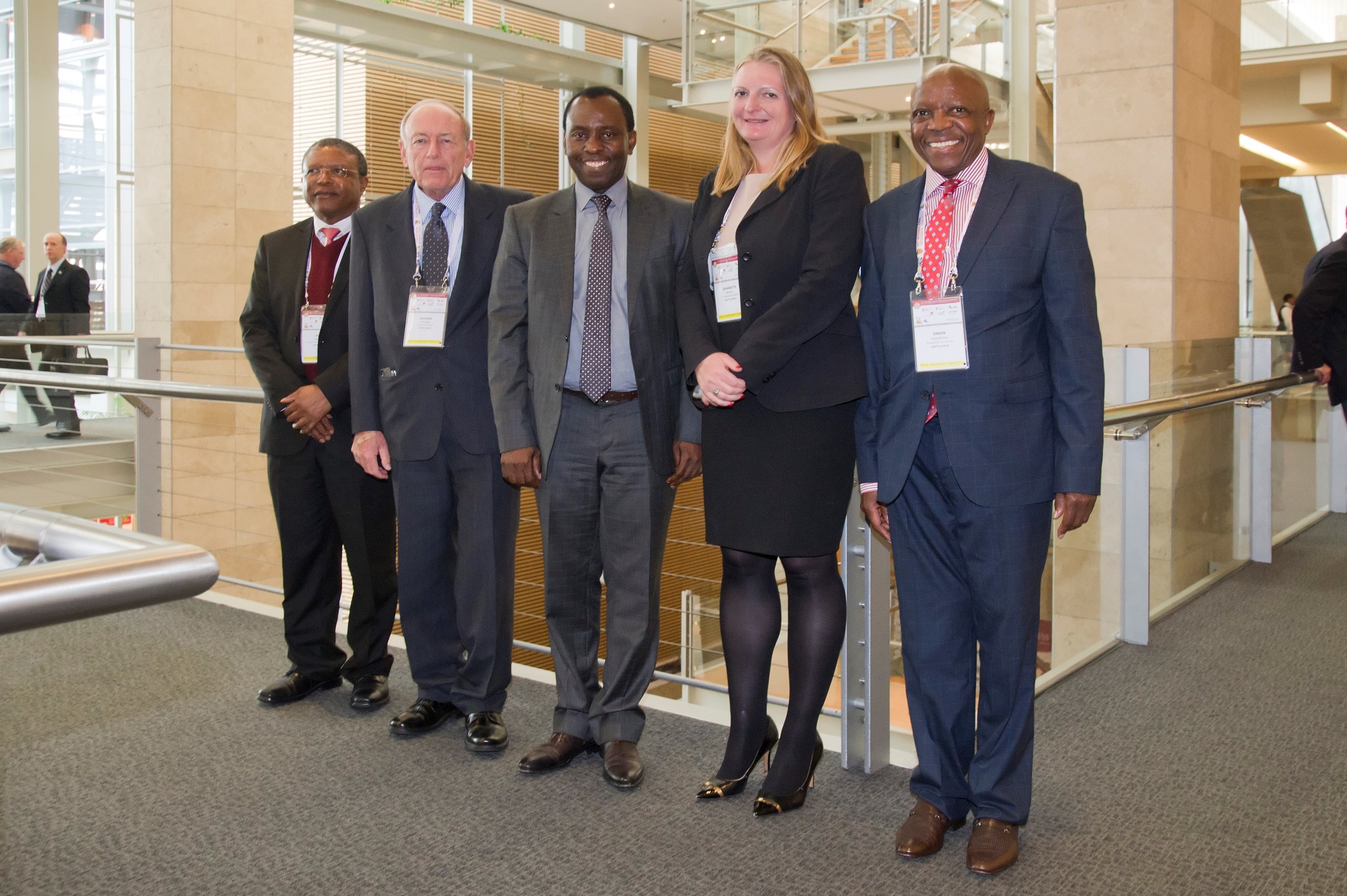
CAPTION: The Honourable Minister of Mineral Resources, Mr Mosebenzi Zwane, opened the prestigious 35th International Geological Congress (IGC) at the Cape Town International Convention Centre (CTICC) yesterday morning, 29 August 2016. From left to right: Professor Phuti Ngoepe, (Chairman of the Board – Council for Geoscience), Dr Richard Viljoen (co-president of the 35th IGC), Honourable Minister Mosebenzi Zwane (MP), Dr Jeannette McGill (co-president of the 35th IGC) and Simon Sikhosana (acting CEO – Council for Geoscience). Photographer: Frank Kurmmcher
More than 4000 delegates from 120 countries flocked to the Cape Town International Convention Centre (CTICC) yesterday to mark the opening ceremony of this prestigious International Geological event, occurring for the 35th time since 1878.
“It is fitting that the geological community has returned to the African continent,” said Minister of Mineral Resources, Mr Mosebenzi Zwane. Welcoming delegates to the “cradle of humankind” – “phecelezi’ imvelaphi yabantu” – Minister Zwane reminded the delegates that the 1929 IGC conference, in Pretoria, had “catalysed advancement of the profession resulting in a significant improvement and a better understanding of the country’s and regional geological prowess”. This year's programme affords the opportunity to retrace some of these field trips and examine the advances made over the 87 intervening years.
This ground-breaking exposure to the wonders of South Africa's geology enabled global mining concerns in particular to make major commercial breakthroughs. Now, it is time to square economic opportunity with social and environmental responsibility. As Minister Zwane put it, “It is both untenable and unjustifiable to sustain a structurally flawed economic model that places the African continent at the bottom quartile of development, notwithstanding its natural resources endowment that spans land, minerals, upstream petroleum and others.”
The best way to turn this state of affairs around is to reverse the brain drain from the country and keep African knowledge assets in-house. To this end, according to professor Richard Viljoen, co-president with Dr Jeannette McGill (one of the Global 100 Women in Mining for 2016) of the 35th IGC, bridging distances between African geoscientists is a key goal of the IGC.
“This conference is not for South Africa alone but all of Africa,” Viljoen added. “The idea was to attract as many African delegates as possible.”
Another key idea is bringing the earth sciences closer together with other economic sectors, especially agriculture and tourism.
Minister Zwane emphasised this point: “There is an emerging narrative on the tension between mining and agriculture. But the truth is that through the creative cross application of the knowledge bases indicate that the two are not necessarily mutually exclusive. The connection between mining and agriculture is evidenced through geo-scientific research and interventions aimed at attaining food security.”
Empowerment is high on the agenda. Said Minister Zwane, “It is critical to empower women and the youth in geosciences to ensure continuity of the profession and its contribution to humanity. The African Continent has the largest population dividend that we must leverage.”
That's why, according to Viljoen, “The intention is to cater to the needs and aspirations of young earth scientists through the GeoHost programme.” This is an assistance programme designed and developed by the IUGS to help young, financially disadvantaged geoscientists attend the IGC.
“The Young Earth Scientists Network is well represented at this year's conference; they can now network and interact with world authorities to gain a broader perspective,” said Viljoen.
“Today you can have artificial intelligence displacing industries. How do you really pioneer the future? Geoscience is standing on the edge of an immense opportunity.”
Dr Greg Botha, senior specialist scientist at the Council for Geosciences (CGS) and secretary-general of the 35th IGC concludes: “The week is only just started. Delegates can look forward to a host of geological topics ranging from climate change and shale gas to environmental issues and geological professionalism.”
For more information about the IGC visit http://www.35igc.org/. Join the 35th IGC Facebook page at https://www.facebook.com/35thigc/. Registrations are also still open. Visit http://www.35igc.org/Verso/60/Registration to sign up.
Celebration of women empowerment in Diepsloot
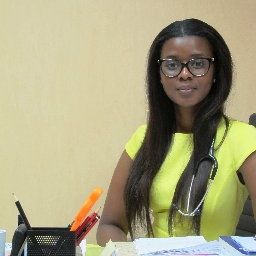
CAPTION: Dr Zinzi Mkhize-Hlubi, a general practitioner from Fourways, Johannesburg, discussed womens’ health and issues in a short speech at Friday’s Women’s Dialogue organised by the National Children and Violence Trust (NCVT).
“Viva, women, viva!”
Such were the shouts of the ladies in attendance at the National Children and Violence Trust (NCVT)’s Women’s Dialogue held in Diepsloot on Friday, 19 August 2016. Approximately 80 women gathered at the St. Mungos Church to celebrate and reflect on their power to overcome the physical and emotional challenges that they face on a daily basis.
After Nokwazi Dlamini, senior social worker at NCVT, welcomed the women, members of the NCVT’s youth choir entertained the crowd with their songs. They received a warm applause before Dr Zinzi Mkhize-Hlubi took the stage.
“Women’s Month is not only about celebrating women and their achievements, but also about taking stock of our health and changing bad habits to live a healthy lifestyle”, she said. Mkhize-Hlubi went on to emphasise her belief that women form the backbone of families and communities – they should receive regular health education. She quoted Brigham Young: “When you educate a man, you educate a man; but when you educate a woman, you educate a generation.”
Judith Mthombeni, senior social worker at NCVT, also gave practical tips as she engaged with the women about domestic abuse. Social workers encounter different types of abuse every day, including emotional, physical, sexual and economic abuse. Much of the abuse stems from the power dynamics in relationships; women are often financially dependent on the person abusing them, rendering them seemingly powerless to escape. “We must not allow the violence to continue,” Mthombeni urged. She explained ways that women can prevent or address abuse, including economic empowerment, legal avenues (such as protection orders) and counselling.
The official programme ended with music, boisterous dancing, socialising and a definite feeling of optimism in the air.
“Today was so inspiring,” says Dlamini. “Interacting with people living in areas where significant financial and emotional support is needed really motivates us to work hard and keep making a positive difference.”
The NCVT will be hosting a second Women’s Dialogue in Cosmo City at the Multipurpose Centre, on Tuesday, 30 August 2016 at 10:30. For more information and to join the event, contact the NCVT at 011 705 1960.
More information about the NCVT is available on their website at http://www.ncvt.co.za/. Join them on Facebook: https://www.facebook.com/The-National-Children-Violence-Trust-NCVT-197670257245796/ or Tweet them at @NCVT.za.

CAPTION: Members of the NCVT youth choir, with Nondumiso Nsibi, the musical director.
GeoHeritage and GeoHost: Legacy of the International Geological Congress
The 35th International Geological Congress (IGC) is building a legacy for geoscientists all over the world – now and in the future. The congress is taking place at the Cape Town International Convention Centre in South Africa from 27 August to 04 September 2016.
The IGC’s legacy comprises of two initiatives: GeoHeritage and GeoHost. Both of these initiatives focus mainly on promoting geosciences within the African continent. GeoHeritage showcases Africa’s amazing geological wonders to the world, while GeoHost grants geoscientists from disadvantaged backgrounds full access to the IGC.
GEOHERITAGE LEGACY
In order to draw the attention of IGC delegates to the remarkable geological superlatives and heritage of the African continent, a special 35th IGC commemorative book titled “Africa’s Top Geological Sites” will be available for all delegates. This volume, with 44 chapters and over 50 authors and co-authors, is a primary GeoHeritage legacy project of the congress.
“The objective of this unique publication is to assist in bridging the gap between geoheritage, geoscience, society and tourism” says Richard Viljoen, co-President of the IGC. “The book is also planned to act as a catalyst for the eventual establishment of an African Geoparks Network,” he continues.
A number of the sites described, including Table Mountain, the Vredefort Dome and the Cradle of Humankind, are in the process of being recognised as part of the United Nations Educational, Scientific and Cultural Organisation (UNESCO)’s Global Geoparks Network, which will attract geotourism from around the world. In celebration of the IGC, some of these sites will be captured on a special commemorative stamp collection that will be issued by the South African Post Office on 26 August 2016.
Another unique publication for the IGC, titled “The Great Mineral Fields of Africa”, aims to showcase the African continent’s extensive and varied mineral heritage. The book provides an overview of the continent’s unrivaled mining heritage, including the Witwatersrand Basin (the world’s greatest goldfield) the Bushveld Complex (which contains the world’s greatest deposits of platinum, chromium and vanadium) and the fantastic diamond deposits of Africa. The information provided will assist in attracting future exploration and investment to Africa.
GEOHOST LEGACY
“GeoHost is a support programme; it gives individuals who are not able to attend this prestigious global conference the opportunity to do so,” says Jeannette McGill, one of the global top 100 women in mining* and co-president of the IGC. “It is an important initiative, as it allows the congress to give back to the broader geoscience community,” she continues.
In order to be considered for the GeoHost programme, applicants needed to either be under the age of 35 years or hail from low-income African countries. A greater weighting was given to young applicants from developing economies. Thanks to contributions made by the African Union, international organisations, industry and corporate sponsors and various South African government departments, the IGC was able to provide additional funding for members of the South African academic geological community to attend.
The GeoHost programme is providing full funding for 81 successful applicants from all over the world – the funding includes airfares, accommodation, conference registration and a daily stipend for the individuals. An additional 66 delegates received the registration fees, while 18 other delegates received funding through the associated partnerships mentioned above.
Besides GeoHost, the IGC is also promoting geoscience to high school teachers in the Western and Eastern Cape by offering a Geoscience Information for Teachers (GIFT) workshop on 27 and 28 August 2016, at the Iziko Museum in Cape Town. The workshop will be presented by world-class geologists and will provide participants with hands-on activities and exercises in the geological field. The attending teachers will also receive educational material to spread their love for geology to their pupils.
“The 35th IGC is set to leave a lasting legacy, not just for the South African geological society, but for geoscientists all over the world,” says McGill. “We are proud to have the GeoHeritage and GeoHost initiatives as part of the Congress and urge the African and global geosciences community to join the IGC,” she concludes.
Registrations are open. Visit http://www.35igc.org/Verso/60/Registration to sign up.
For more information about the IGC visit http://www.35igc.org/. Join the 35th IGC Facebook page at https://www.facebook.com/35thigc/.
*According to Women in Mining, https://www2.deloitte.com/content/dam/Deloitte/ru/Documents/energy-resources/100-global-inspirational-women-in-miningl.pdf
Walk your talk and improve your reputation
Businesses don’t fail, leaders do. In the words of Henry A. Kissinger, “The task of the leader is to get his people from where they are to where they have not been.” Leaders need to walk their talk; operational governance is an important building block in managing a lasting, positive reputation. Regine le Roux, Managing Director at Reputation Matters, shares insights on how this key element exemplifies your reputation to your stakeholders.
Building a strong corporate reputation is all about consistency, which is fundamental in successfully running an organisation. To ensure consistency within an organisation, it is vital to align operational governance namely the organisation’s rules, processes, procedures and policies to its strategic intent, and ultimately having the leader of the organisation walk their talk.
“Operational governance essentially establishes the ground rules for conducting your day-to-day business; its purpose is to clarify the intervention scope of some areas, defining reporting and decision flows, what needs be done and by whom and who the buck stops with,” shares le Roux. “It is the organisational component that establishes the frontier with operational activities. In our line of work, we very often see that there is no alignment between the strategic levels of an organisation and their operational levels. They might have very good intentions to give excellent service or provide quality products, without having the necessary operational governance in place,” continues le Roux.
Communicating policies and procedures ineffectively poses a colossal threat to an organisation’s reputation, especially on internal governance structures. It is therefore crucial not only to have procedural structures and policies in place, but also to communicate these internally, so that all parties understand what they should be doing, how they should do it and why it is important.
Le Roux motivates that a two-way conversation will enable feedback from key stakeholders to raise and address any uncertainties before issues arise; in that way the processes can be refined even further.
“Leadership within the organisation needs to be seen as ‘walking the talk’, and leading by example; they themselves need to be seen following protocol when it comes to company rules to ensure business continuity,” says le Roux. “As a leader myself, it is paramount that I lead by example by keeping in line with my organisation’s vision, mission and values. Similarly, it is also important to have operational governance structures in place for all stakeholder groups, including external groups such as: customers, suppliers, distributors and the media, to name just a few. The first step is to identify key stakeholder groups, each with its own set of governing structures and communication platforms in place,” she adds.
“It is essential that everyone within the organisation is familiar with company rules for each of the stakeholder groups so that they can speak with the same voice when engaging with different stakeholders,” explains le Roux. Echoing the same message from within is crucial for organisations. It eliminates confusion and inconsistency; and ultimately builds trust in how the company operates.
As an example, having clear and consistent payment terms and conditions outlined across the board for customers and suppliers from the outset of the relationship, will level the playing field and let everyone know what the expectations are right from the start. This will allow everyone to plan accordingly. Without procedures in place, an organisation sets itself up for a catastrophe. As Benjamin Franklin once said, “If you fail to plan, you are planning to fail.”
“When it comes to corporate governance, communication is the glue that brings it all together. Consistent communication about operational governance builds reliability, which ultimately builds trust and positively impacts corporate reputation,” concludes le Roux.
For more information on managing and investing in your reputation, visit www.reputationmatters.co.za or call +27 (0)11 317 3861. Reputation Matters is also on Facebook (www.facebook.com/yourreputationmatters) and Twitter (@ReputationIsKey).
Stellar speaker line-up for 35th International Geological Congress
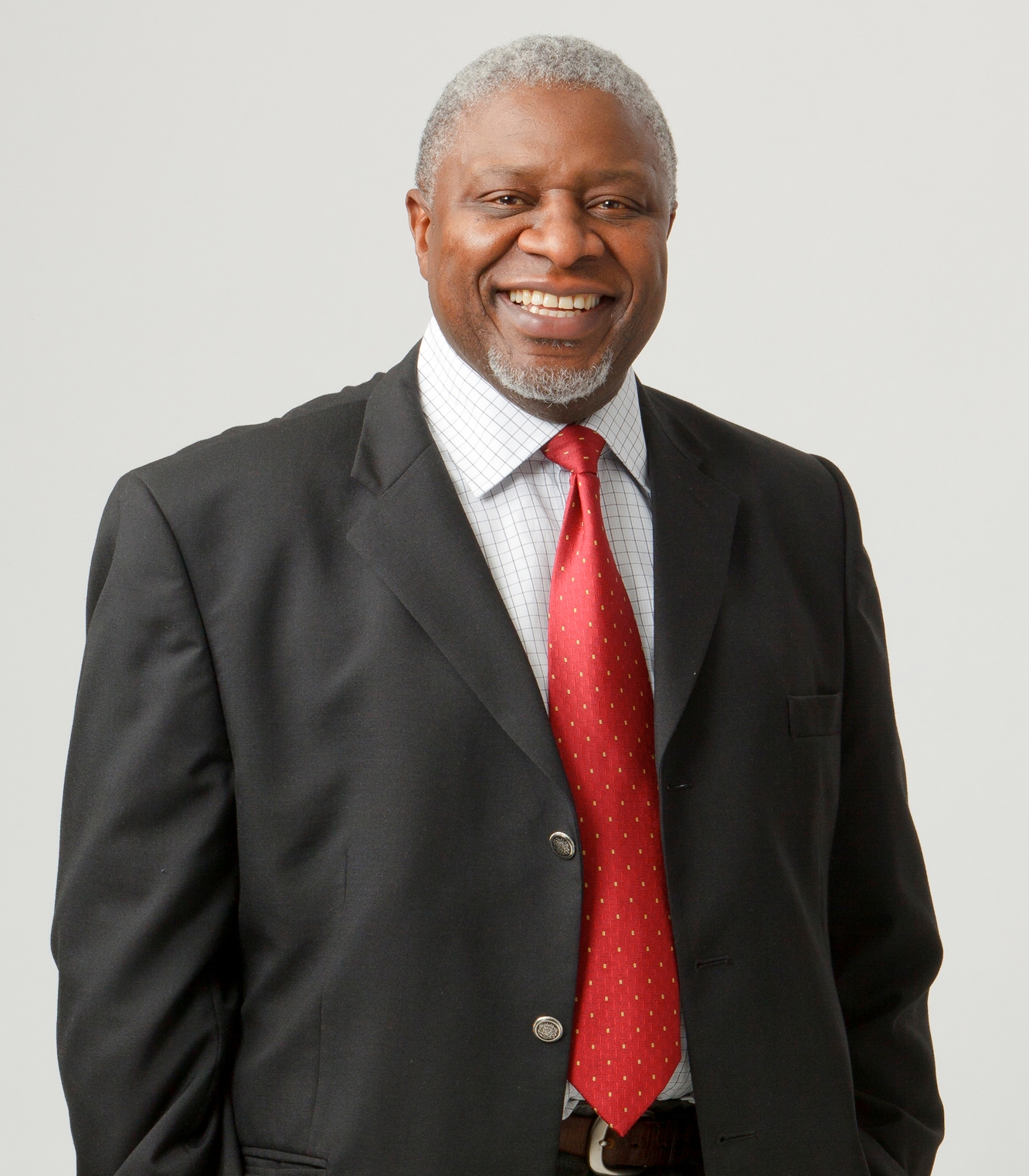
Caption: The 35th International Geological Congress is set to be an explosive event with geoscience experts from all over the world converging at the Cape Town International Convention Centre (CTICC) from 27 August to 04 September 2016. Among the diverse plenary speakers is Sipho Nkosi, former CEO of Exxaro Resources Limited.
The International Geological Congress (IGC) brings together subject experts from all of the geosciences. The broad range of topics covered include everything from mining and volcanology to medical geoscience, geoethics and palaeobiology – all captured in three core topics: geoscience for society, geoscience in the economy and fundamental geoscience. With over 4 000 presentations, the IGC is jam-packed with information and invaluable networking opportunities. Some of the most important sessions to look forward to are the ten plenary presentations that will be taking place during the IGC, with the best qualified professionals to present them.
‘Geoscience for society’ covers aspects where the geoscience meets the public. Plenary speaker Ruth Allington from GWP Consultants will present her views on how the geosciences can better service society by bridging the gap between academic science, applied geoscience and geological research. Similarly, Michel Jebrak from the University of Quebec will address how geologists in mining are key to helping the industry become more socially and environmentally responsible.
John Anderson from the Nelson Mandela Metropolitan University will discuss the Africa Alive Corridors Project, which aims to explore the history of mankind in Africa and use knowledge of this heritage to uplift all the people on the continent. Geosciences also meet society inasmuch as it mitigates the effect of natural disasters on human lives – Mustapha Meghraoui will discuss advances in the African seismic studies that will increase the accuracy of earthquake hazard assessment.
The second core topic, ‘geoscience in the economy’, mainly pertains to how geology, through mining, contributes to national financial well-being. Sipho Nkosi, former Chief Executive Officer of Exxaro Resources Limited, will be the first plenary speaker to explore this theme. He will discuss how Africa’s mining industry can develop to gain the greatest possible economic benefit. Thomas Graedel from Yale University will explore how the mining industry might better optimise use of metals along various parts of the metal life cycle, while Joe Cartwright from the University of Oxford will delve into the challenges faced by the shale gas industry.
Lastly, ‘fundamental geoscience’ forms an important part of this congress that celebrates the full breadth and depth of the geosciences. Plenary speaker Bob Scholes from the University of Witwatersrand will explain how Earth system processes and human development influenced each other since the beginning of history, while Anusuya Chinsamy-Turan from the University of Cape Town will be presenting on how bone growth and development in extinct species have been determined by historical fossil studies. Finally, Chris Hawkesworth from the University of Bristol will elaborate on how the continental crust comes into being.
“The line-up for this year’s IGC comprises a truly exceptional set of speakers and presenters,” says Laurence Robb, Scientific Programme Chair of the 35th IGC. “The IGC being hosted in South Africa is a once-in-a-lifetime event. If you are interested in anything related to the geosciences, do not miss it,” concludes Robb.
Registrations are open. Visit http://www.35igc.org/Verso/60/Registration to sign up.
For more information about the IGC visit http://www.35igc.org/. Join the 35th IGC Facebook page at https://www.facebook.com/35thigc/.
Rotary’s SafeWater Project supplies life-saving water filters to the people of southern Africa
For a mere R40 you could help provide a household with 1600 litres of clean drinking water that lasts 100 days. The lack of clean and safe drinkable water negatively impacts hundreds of communities and thousands of people across Sub-Saharan Africa every day. Rotary District 9350’s SafeWater Project aims to give all of these communities access to safe drinking water by providing them with Community LifeStraws, water filters that remove 99.9% of all water borne germs.*
The Rotary Club of Sea Point, part of District 9350, together with its partners, the Relate Trust and Woolworths, plan to enhance the lives of many people who don’t have clean drinking water. “Water borne diseases causing diarrhoea kill more children in Sub-Saharan Africa than HIV/AIDS, measles and malaria combined!” says Dr Tony Davidson, Co-ordinator of the Rotary SafeWater Project. “Providing safe drinkable water is of the utmost importance,” adds Davidson
“We are selling bracelets to raise the much needed funds for water filters. Our partnership with Woolworths proves invaluable as it enables us to reach more people across Sub-Saharan Africa. The bracelets will be sold in over 160 stores in South Africa, Namibia and Swaziland,” says Davidson. “The majority of funds raised will go towards the installation of LifeStraw water filters within households and communities that do not have access to clean and safe drinkable water.”
“The purchase of one bracelet will provide a household family with 1600 litres of clean and safe water,” says Dr Davidson. “It is enough drinkable water to last a 100 days.”
“On top of dealing with the after effects of the disastrous drought, another concern for the country is that the amount of surface water contaminated by germs and parasites is increasing on a daily basis,” adds Davidson. He explains that providing communities with these point-of-use filters will help reduce the prevalence of diarrhoea, currently the second biggest killer of children under the age of five in rural areas, and enhance the quality of life for many people with good quality water.
“The LifeStraw filters also helps to reduce deforestation as it eliminates the need for boiling water on wood fires for purification purposes. It also improves the education of rural children who are often absent from school as a result of diarrhoea, however, by reducing the source of the illness they can attend school more often,” adds Davidson.
The Rotary SafeWater Project empowers and uplifts communities in every aspect of the project, from production to spending funds. As part of the Relate Trust, unemployed grandmothers are trained to make these bracelets, which provides them with employment and a much needed source of income. “Besides contributing towards LifeStraw water filters, funds raised through the sale of the bracelets will go towards employment and enterprise development in communities struck with poverty, as well as the provision of crucial water and sanitation infrastructure to the school children across South Africa,” concludes Davidson.
The bracelets will be available at selected Woolworths stores for R39.95 each from July 2016 until December 2016.
For more information on the Safe Water Project, the Community LifeStraw filters and previous Rotary District 9350 projects, visit http://safewater.rotary9350.co.za/| Facebook: https://www.facebook.com/Rotary-SafeWater-D9350-405344246170925/.
* Rotary Club of Sea Point. 2016. The Solution from LifeStraw. [Online] Available from: http://safewater.rotary9350.co.za/projects/lifestraw-solution [Accessed: 2016-07-11].
NCVT reflects on the challenges that women face
“The most common way people give up their power is by thinking they don’t have any.” – Alice Walker. Women are often made to feel that they have no power, something which is entirely untrue. This Women’s Month, the National Children and Violence Trust (NCVT) reflects on this issue.
Since its inception in 1994, the National Children and Violence Trust (NCVT) has had vast experience in assisting women from impoverished areas such as Diepsloot, Zandspruit and Cosmo City. These women often face seemingly hopeless situations, including physical and emotional abuse. With Women’s Month approaching, NCVT reflects on these challenges and the supportive role that social workers play.
Poverty remains one of the greatest challenges in South Africa, with around 20% of households reporting to have run out of money to buy food during 2015/2016*. “A large majority of women born into poverty often struggle to get themselves out of the perpetual cycle of poverty unless they have had access to education”, says Nokwazi Dlamini, a senior social worker at NCVT. “A lack of financial independence often causes women to enter and stay in abusive relationships. When it comes to domestic violence, women have been found to be more proactive in seeking help from social workers than men, but this usually only happens when the violence has escalated too far. A woman should preferably seek help as soon as domestic violence occurs, not only once it has become the norm or she ends up in hospital,” adds Dlamini
A second challenge that women face is that they absorb most of the burden of raising a family. “In our line of work, we have seen a rise in the number of female single parent headed households over the last few years. The resultant stress can cause chronic anxiety and other psychological disorders,” says Dlamini.
Last, but by no means least, rape is an ongoing issue. Statistics show that most rape victims are raped by someone known to them, with 25.5% of sexual offences being committed by the spouse or lover of the victim**. “For this reason, these victims often do not report the rape or approach social workers for counselling,” explains Dlamini.
“The current social stigma in the areas where we work is that women are expected to keep family matters within the family. Approaching social workers is, therefore, seen as having failed to deal with the issue properly by oneself. We encourage women to nullify this stigma and seek assistance where necessary,” motivates Dlamini. “As social workers, we found that some women find it hard to confide in us, feeling that they will be judged or blamed for the violence inflicted on them; in contrast, other women feel that social workers will be able to solve all their problems, while failing to implement interventions after the counselling.”
However, the work that social workers do remains an immensely powerful tool for helping women in difficulty. “There are women who are optimistic and trust us enough to get the necessary guidance that will help them solve their problems. We provide the necessary counselling and they implement the steps that help them to recover from their experience and improve their situation – those women are the ones that really experience a difference,” concludes Dlamini.
Come join NCVT this Women’s month and find out more about how they touch lives. Under this year’s theme, “Women’s Wellness”, NCVT will host two events focused on women in impoverished communities: A Women’s Dialogue will take place at 10:30 on 12 August 2016 at St Mungos Church in Diepsloot, with a performance by the NCVT Choir to enjoy. A similar dialogue will also take place in Cosmo City on 26 August 2016
“We are looking forward to celebrating the amazing women that we are involved with next month,” says Dlamini. “Come join us for our Women’s Month and find out more about how we touch lives,” she concludes.
For more information about NCVT and to join the events this Women’s Month contact 011 705 1960 or visit http://www.ncvt.co.za/. Join NCVT’s Facebook page at https://www.facebook.com/The-National-Children-Violence-Trust-NCVT-197670257245796/ or Tweet them at @NCVT_ZA.
*Statistics South Africa Community Survey 2016
**Statistics South Africa Victims of Crime Survey 2014/2015
The importance of geosciences in mining

CAPTION: Geoscience is important for a country’s economy because it defines the mineral resource and ensures the success of mining ventures. Mogalakwena, the world’s largest opencast platinum mine, (above) is located in a complex geological setting near Mokopane, Limpopo, South Africa and supplies a great percentage of the world’s platinum. [Photo credit: Morris Viljoen]
The 35th International Geological Congress (IGC) is taking place from 27 August to 04 September 2016 at the Cape Town International Convention Centre. Mining development is one of the main areas where geoscience directly contributes to a country’s economy. Africa is destined to supply a large portion of the world’s future mineral resources through the application of various scientific approaches. For this reason, the theme: ‘Resourcing Future Generations,’ will feature prominently at this year’s IGC.
“There is no mining without geology,” says Aberra Mogessie, President of the Geological Society of Africa and convenor of a special symposium on the African Mining Vision (AMV) at the IGC. “Geological, geochemical and geophysical investigations form part of the foundation for successful exploration of mineral occurrences,” says Mogessie.
Richard Viljoen, the co-president of the IGC, agrees and adds that effective mining, particularly of lower grade or erratic ore bodies, is based entirely on good quality geoscientific input. “Without accurate and reliable geoscientific input, most mining ventures are likely to fail,” says Viljoen.
The AMV was established by the African Union (AU) Heads of State and Government in 2009 in an attempt to better manage the continent’s mineral resources. “Africa holds an abundant amount of mineral resources, but so far it has not been able to reap the full potential benefits on offer,” says Viljoen. The AMV aims to effectively utilise Africa’s mineral resources through transparent, equitable and optimal exploitation of all mineral resources to underpin broad-based sustainable growth and socio-economic development on the continent. This will be achieved through:
- Building the capacity of regional and national minerals-related institutions;
- Investing in improved physical, social and human capital;
- Developing technology and products in the mining sector; and
- Strengthening environmental and social management.
The African Minerals Development Centre (AMDC) was founded by the AU Commission to provide strategic support to the AMV and is responsible for tying together all the various earth science initiatives and projects across the continent. “As part of their efforts, the AMDC is currently developing the Geological Mineral and Information System Strategy (GMISS) to provide the necessary guidance and support to AU members in improving their geological and mineral information systems,” says Mogessie. “This will encourage investment across the whole mineral value chain,” he adds.
“The GMISS views geological and geospatial information as crucial for several important economic, social, legal and environmental applications in mining and broad development processes in Africa,” says Mogessie.
“The themes of this year’s IGC will shed some light on the purpose and roles of the AMV, AMDC and GMISS. A comprehensive understanding of the industry from a wide range of mining industry geologists from all over the world will also be presented,” says Viljoen. “We are providing an opportunity for key players within the African mining industry to gain invaluable knowledge at the IGC. It should not be missed!”
Registrations for the congress are open. Visit http://www.35igc.org/Verso/60/Registration to sign up or book your exhibit on http://www.35igc.org/Verso/44/Exhibitors-Advertisers.
For more information about the IGC visit http://www.35igc.org/. Join the 35th IGC Facebook page at https://www.facebook.com/35thigc/.
Fun for young and old at Cape Town ECD Centres

Caption: For many children living in Cape Town’s informal settlements, their grandparents are one of their primary caregivers. Approximately 270 youngsters from Mustadafin Foundation’s Early Childhood Development (ECD) Centres in Cape Town, treated and gave thanks to their grandparents on Wednesday, 27 July 2016 at the Foundation’s annual ‘Grandparents Day’.
It was a day of giving back for the children at Mustadafin Foudation’s four ECD Centres located in Delft, Khayelitsha (Site B and S-Section) and Manenberg. “Our main goal for 2016 is focused on education – ECD’s being a focal point. We are embarking on a holistic approach with our ECD centres, where we plan activities and excursions that teach our children fundamentals in a fun environment,” says Ghairunisa Johnstone-Cassiem, Director at Mustadafin Foundation.
The ‘Grandparents Day’ festivities took place at all four ECD Centres, with approximately 100 grandparents being entertained with song, dance and gifts from the children aged between two and six years old. Most of the grandparents are direct family of the children or volunteers at the Foundation. The lively young ones spent the day learning, as the grandparents told stories and read from books.
“The aim of the day was to remind children to say thanks to their caregivers – most of them being their grandparents. With our ‘Grandparents Day’, it is important that children learn to respect elders and give thanks for the sacrifices some of their families have made. It is also a fun day for the grandparents; some of them live in dire, poor circumstances and do not have much to look forward to everyday,” mentions Johnstone-Cassiem.
One of the grandparents in attendance was overjoyed: “As a grandparent I felt warmth in my heart not knowing what my grandchild and Mustadafin planned for me. The few hours were great and all the surprises my grandchild gave me.’’
Mustadafin Foundation’s ECD Centres operate in some of the poorest areas in Cape Town. “With excursions and sustainable activities, children are positively stimulated to care for their neighbours and are moulded into self-reliant and self-sufficient citizens,” concludes Johnstone-Cassiem.
For more information about the Foundation and how you can donate or volunteer, please visit www.mustadafin.org.za or contact 021-633-0010. Mustadafin Foundation is also on Facebook www.facebook.com/MustadafinFoundation.
