
Top international speakers lined up for ArchitectureZA 2015
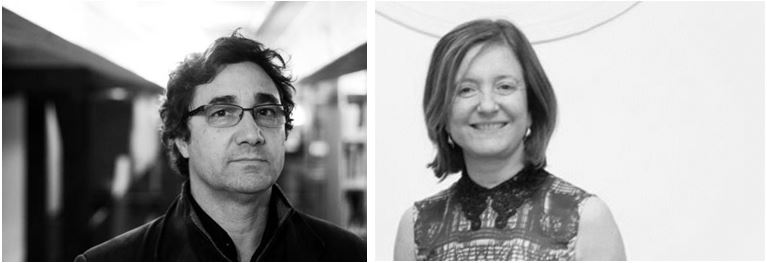
Caption: Co-founder of Urban-Think Tank Alfredo Brillembourg (left) and architectural historian and theorist, Beatriz Colomina (right) from Princeton University in the United States will speak at one of Africa’s first and largest premier urban culture and design festivals, ArchitectureZA 2015 (AZA2015). The event is proudly hosted by the South African Institute of Architects (SAIA) set to take place in Johannesburg from 24 to 26 September 2015.
This year’s ArchitectureZA 2015 (AZA2015) boasts an impressive line-up of international speakers with a wealth of varied and fascinating contributions to the world of architecture. With captivating speakers from around the world and locally, AZA2015 is set to present the latest trends and newest ideas whilst giving many an opportunity to learn from and network with top international names in in the world of architecture and design. The fifth annual AZA event takes place at The Sheds @ 1 Fox in Newtown, Johannesburg from 24 – 26 September 2015.
Among the international line up is architectural historian and theorist Beatriz Colomina, from Princeton University in the United States. Her work on architecture and media has been published in over 25 languages and her curated exhibition, Clip/Stamp/Fold: The Radical Architecture of Little Magazines 196X-197X has toured eleven countries, including exhibitions such as Documenta 12 and The Architectural Association. Colomina and her partner, Mark Wigley will also be directing the highly anticipated Istanbul Design Biennale next year.
Colomina is expected to speak about the new thinking around biology and architecture, particularly the potentials of neuroscience. She is currently working on a book titled X-Ray Architecture which focuses on the impact of medical technologies on architecture.
“The most important transformation in social and cultural life since 2000 has been the arrival of social media and a culture of surveillance. This has enormous consequences for architecture; what is regarded as being private and what is public has been radically transformed,” says Colomina.
The architect’s chief role, according to Colomina, is to make people think about the space they live in. With these latest major social transformations, a designer also has to rethink the way problems are framed. “Everything needs to be rethought in light of the population explosion and information explosion and the way our lives have been transformed with the internet and social media,” says Colomina.
New York born co-founder of Urban-Think Tank (U-TT), Alfredo Brillembourg, is also not to be missed at AZA2015. Brillembourg is no stranger to South Africa, and was a guest speaker at the 2012 Design Indaba. There, Slum Dwellers International introduced him to Ikhayalami, which lead to a partnership in seeking to upgrade informal settlements in Cape Town with a unique double story shack design. This ‘Empower Shack’ collaboration is a perfect fit for U-TT, which has worked extensively in designing social architecture in developing contexts worldwide.
Speaking about the shack design, Brillembourg says, “We thought, that if we could develop a prototype that distributes the living area over two floors, we could then recover double the amount of footprint area currently occupied by the existing shacks. This would provide enough space to develop the urban qualities currently lacking in the densely built urban fabric of the settlements.” One hundred double-story shacks at two sites in Cape Town are expected to be completed by the middle of next year.
Brillembourg’s focus is on serving social needs through well designed, sustainable physical forms: “From our beginnings in Caracas, to our more recent activities in South Africa, Colombia and elsewhere, we have sought to work with communities and partners to reimagine the possibilities of life in the informal city.”
Like a true architectural visionary, Brillembourg wants to push future boundaries in how cities extend upwards. “The big question is if the city is up in the air, towers can take on any shape. Towers no longer have to respect the rationality of the city grid once we are up in the air.”
London based architectural designer, Julia King is another captivating speaker at AZA2015. King has a special focus on sanitation and participatory processes in developing countries. She will share insights from her sanitation and housing projects in India which form part of her PhD 'Incremental Cities'.
Palestinian architect and writer, Suad Amiry will also speak at the highly anticipated event, sharing insights from her experiences as founder of Riwaq: the Centre for Architectural Conservation which documents and restores architectural heritage sites across the West Bank, Jerusalem and Gaza.
AZA2015 is not just a conference; there will be master classes, workshops and multitude of public events. It is an opportunity for interested participants from non-design disciplines to share in the future of South Africa’s cities and be part of the regeneration of major urban life, right in the heart of Johannesburg.
AZA2015 is proudly hosted by the South African Institute of Architects (SAIA) and sponsored by PPC Ltd. Affiliated partners include: the Gauteng Institute for Architecture (Gifa) and the University of Johannesburg (UJ.) For more information about AZA2015, visit http://architectureza.org/. AZA2015 is also on Facebook (https://www.facebook.com/architectureza).

Executive Mayor of the City of Tshwane addresses the sustainability question
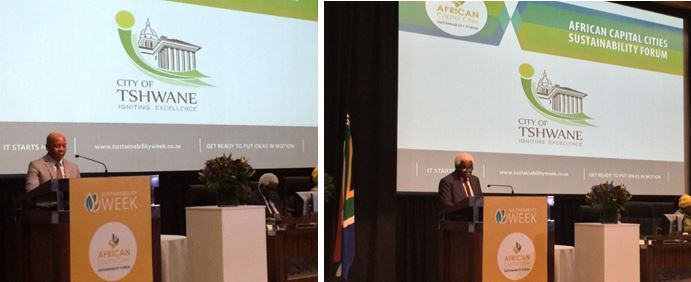
Photo caption: Honourable Councillor Kgosientso Ramokgopa (left), Executive Mayor of the City of Tshwane, addressed attendees at the inaugural African Capital Cities Sustainability Forum at Sustainability Week today, 23 June 2015. Ramokgopa provided a local perspective on the sustainability needs and solutions facing South Africa and discussed the City of Tshwane’s Vision 2055 to become a low carbon, resource efficient and climate resilient city. Jean-Pierre Elong Mbassi (right), Secretary General of United Cities and Local Governments of Africa, shared his expertise and views of urban and economic development, local governance and housing as well as how co-operation between African cities will have a greater impact on urban growth.
The forum explored opportunities to address the sustainability imperative arising from the current and numerous challenges facing African cities. Mayors from the African capital cities of Abuja, Mbabane, Harare, São Tomè, Dodoma, Kinshasa, Banjul and Abuja, amongst others, were in attendance and speakers looked at how appropriate policies, design ingenuity, innovation, technical proficiency and infrastructural investments can ensure a sustainable and prosperous future for the next generation.
“According to the United Nations, in 1919 only 40% of the global population lived in cities. Today just over 50% live in cities and it is predicted that by 2050, 70% of the global population will be living in urban centres. A large percentage of this number will converge in capital cities,” said Ramokgopa.
“This forum seeks to establish commonalities and challenges experienced by the major cities in Africa while showcasing and sharing successful initiatives towards the emergence of truly African, original and appropriate answers in addressing the sustainability imperative. This significant pan African dialogue will lay the foundation for expanded African cooperation at the city level, and at the urban scale,” he continued.
The Forum forms part of Sustainability Week which brings together a wide variety of stakeholders from a range of sectors to discuss sustainability under specific themes: green building, food security, transport, manufacturing, energy and water amongst many other riveting seminars.
Sustainability Week, hosted by the City of Tshwane takes place from 23 to 28 June 2015. For more information on Sustainability Week, visit www.sustainabilityweek.co.za
Western Cape youth take ownership of their communities this Youth Day
'I believe I can make a difference, therefore I have a responsibility to do so’ is the motto of Mustadafin Foundation’s Youth and Mental Health Development Programme. Gangsterism, dropping out of school, substance abuse and teenage pregnancy are some of the many social issues our young people need to contend with on a daily basis. To change this cycle, Mustadafin Foundation will host various Youth Day community outreach programmes in and around the Cape Flats on Tuesday, 16 June 2015 to help young people to understand and deal with these issues.
Over 400 youngsters between the ages of ten and 25 will be rolling out social upliftment programmes in six areas in the Western Cape this Youth Day. These areas include Athlone, Delft, Hanover Park, Nyanga and Khayelitsha (S and V section). This year’s theme of Mustadafin Foundation’s Youth Day activities is ‘Raising Social Conscience: Inspiring Positive Social Change’. Activities on the day will run from 09:00 to 13:00 with the assistance of elders and volunteers and include school and community clean-up projects, drama and drumming performances as well as entertaining and assisting the elderly, orphanages and frail care centres in the identified areas. Fidaah Edries, Mustadafin Foundation’s Youth Development Coordinator, says, “Our youth is faced with so many challenges that negatively affect their future. A high HIV infection rate and an increase in youth headed households also contribute to these challenges that affect both the community and their homes.
“The activities that we are planning form part of our youth mentorship programmes that run throughout the year. The sustainable youth programmes on Youth Day are initiated and driven by the youth themselves, with guidance from their elders to ultimately develop their social responsibility skills,” explains Edries.
“We want the youth to have a real chance at life through these programmes. Our aim is to teach them what it means to be responsible leaders and agents of social change in society,” adds Edries.
Mustadafin Foundation’s Youth Development has also seen considerable progress with its self-sufficient youth group ‘Ikam Valekasi’ (meaning ‘future of the location’ in Xhosa). “This group has made strides in Khayelitsha through the training and support of Mustadafin Foundation’s Youth Development. They will also be facilitating activities on Youth Day and hopefully ignite a continuous routine of ‘giving a helping’ hand; not only on Youth Day, but throughout the year,” highlights Edries.
“When young people claim their right to various developments then they become forceful agents towards progressive social change. When they overcome prejudice and anything that divides them, then they have the awesome potential to prove in unity and togetherness that the whole is always greater than the sum of its parts,” concludes Edries.
Youth Day is not the only day Mustadafin Foundation is active with youth social upliftment initiatives. The non-profit organisation trains youth in Delft, Hanover Park and Khayelitsha to recognize the importance of taking responsibility and making a difference in their communities. These youth run Mustadafin Foundation’s youth interventions in their respective areas.
If you would like to volunteer or donate to Mustadafin Foundation’s Youth Development Programmes, please contact Fidaah at Mustadafin on 021-633 0010 or email yhd@mustadafin.org.za.
For more information contact Mustadafin on 021-633-0010 or visit www.mustadafin.org.za. Join their Facebook page at www.facebook.com/MustadafinFoundation
Untrained corporate spokespeople can destroy a company's reputation

“It takes 20 years to build a reputation and five minutes to ruin it. If you think about that, you’ll do things differently.” – Warren Buffett.
Corporate spokespeople are the face of any company. What they say, how they say it and to whom they say it plays a fundamental role in building a perception of a company and ultimately their reputation. So why is it that many company spokespeople appear not to be trained in dealing with difficult questions from the media or the general public?
We have all seen and heard cringe-worthy media interviews. How can companies safeguard reputations when engaging with the media? Regine le Roux, Managing Director of corporate reputation management agency Reputation Matters, advises, “Any business owner or employee who is selected as a company’s spokesperson needs to undergo comprehensive media training before speaking on their company’s behalf.
“It is so important to understand how to maximise a media interview and to know what journalists in the different media channels (print, broadcast and online) are looking for. For example, how you engage with a print media journalist is quite different from a live broadcast interview; with print media you have a bit more time on your side to get your messages across and you can also share background information and different statistics; whereas with a live radio interview the amount of time that you have to get your key messages across is very limited. Believe me, more often than not the interview will be over much sooner that you thought,” says le Roux.
Media interviews can provide the perfect platform for a company to turn a crisis into an opportunity by training its spokesperson in the art of transparency, empathy and accountability. “It pays to invest in media training for your team. Practicing pre-recorded ‘real life’ interview scenarios with a film crew and media interviewer is invaluable training; it will prepare you to learn lessons before having to conduct a live interview,” comments le Roux. “It’s a daunting task being put in the spotlight on TV or radio, so a well-prepared spokesperson can easily overcome the initial anxiety, focus on the content they want to cover and keep in control of the interview.
It is important to note that there is no such thing as “no comment” adds le Roux, “If a spokesperson is unavailable or refuses to comment, that in itself is a comment! It immediately raises suspicions about an organisation’s reputation. It’s critical to build good relationships with journalists by asking them what their deadlines are and ensuring you respond in time with an official comment.”
It’s not only the content of a comment which counts, but the way a spokesperson speaks – the rhythm, pitch and tone of their voice, their body language and demeanour. “Although organisations are often concerned with profits and long-term plans, it’s critical to understand that a reputation can be negatively affected by just one media interview where a spokesperson fumbles their response or behaves in an aggressive and defensive manner.
“Knowing the media landscape in South Africa, how to interact with different kinds of journalists and what information they find useful will also put company spokespeople ahead of the pack. A good understanding of the do’s and don’ts in media interviews is essential, and an effective and cooperative spokesperson is worth gold to any company,” concludes le Roux.
Reputation Matters offers comprehensive media training packages for companies to equip corporate spokespeople with the necessary tools and tips to conduct effective media interviews with print, broadcast and online media.
For more information on managing and investing in your reputation, contact info@reputationmatters.co.za | 011 317 3861 (Jhb) | 021 790 0208 (Cpt) or visit www.reputationmatters.co.za. We are also on Facebook www.facebook.com/yourreputationmatters and Twitter @ReputationIsKey
About Reputation Matters
Reputation Matters is not just another PR company, we are so much more! We measure five core dimensions of the organisation using our unique Repudometer®research tool to understand what is building or breaking down the reputation.
We have been looking after reputations for the past ten years, with at least a threefold return on investment for our clients.
About Regine le Roux
Regine is a corporate reputation specialist. She completed her Communication Management Honours degree Cum Laude at the University of Pretoria in 2001, and completed her MCom within a year. Regine is the founder of Reputation Matters, which was started in 2005; she hand picks and manages several teams that implement communication strategies. Regine developed the Repudometer®, which is one of the first tools that has been developed to measure organisational reputation.
Regine has mentored several students with their MBA thesis submissions at the Milpark Business School in Johannesburg. In 2008, the company expanded to Cape Town. Regine is the Chairperson for the Western Cape Public Relations Institute of Southern Africa (PRISA) Committee, and is also on the Board of the Rotary Club of Newlands, responsible for Public Image, as well as the Chairperson for Rotary International’s District 9350 (Western Cape, Northern Cape, Namibia and Angola) Public Image.
Hefty fees await non-complying consignors
Caption: Hefty fees and penalties await consignors of cargo who do not adhere to the new Container Packing Code of Practice and the verification of Container Weight Regulations for transport. Consignors will be liable for all costs associated to any damage incurred to property and the environment due to non-compliance of the new regulations. Local and International industry leaders and regulators from the South African Maritime Safety Authority (SAMSA) and the National Department of Transport, gathered in Durban recently for the third International Cargo Transport Units (CTU) Packing Roadshow, where the importance of complying with the new CTU codes and weight verification Regulations were addressed and discussed.
Consignors and any company involved in the transport of cargo, whether general freight, refrigerated or dangerous goods by road, rail or water, in any form of container, trailer, tanker or rail car, will be required by law to implement and adhere to the new IMO/ILO/UNECE Code of Practice for Packing of Cargo Transport Units (CTU)*.
Compliance requires contents to be firmly secured to prevent movement when transported, particularly under turbulent conditions, as well as a stable distribution of weight (within the weight limitations) inside the container prior to sealing and shipping the consignment. The new regulations for the verification of container weight will come into effect in July 2016. This means that the consignor, in other words, the company responsible for packing the contents, will be liable for all the costs associated to any damage incurred should an incident occur while the cargo is in transport.
These essential compliance issues were discussed by industry leaders from all over the world at the recent CTU Packing Roadshow in Durban.
Captain Richard Brough from London, Director of the International Cargo Handling Coordination Association (ICHCA - the leading NGO association representing the interests of the global cargo handling industry), spoke about the consequences of incorrectly secured contents and mis-declared cargo weights and how in-depth research conducted resulted in the amendment of the Code to further enforce proper securing and weight restrictions on cargo transportation. Brough comments, “Container weight verification is crucial as part of this whole process; being a tonne or so out on your calculations can have devastating effects and cause major accidents and losses. With these new measures, it is hoped that high impact incidents will be significantly reduced, if not eradicated.”
Justin Reynolds from the International Maritime Insurance company TT Club adds that, “Disastrous transport incidents are often a result of a domino effect following a single cause, whether its weight, packing or securing related. It’s therefore exceptionally important that we encourage behavioural change through regulations at all levels of the supply chain, to reduce loss and serious liability.”
Representatives from South African Maritime Safety Authority (SAMSA) and the Department of Transport endorsed the need for greater awareness, implementation and compliance by South African industries to reduce incidents in all modes of transport. The next stage is to create awareness about the availability of the amended CTU Code and weight verification regulations, and to train staff appropriately, which will result in improved compliance and fewer devastating incidents.
The extensively revised and upgraded IMO/ILO/UNECE Code of Practice for Packing of CTUs was approved in January 2014 by the International Maritime Organisation (IMO) and United Nations Economic Council for Europe (UNECE) Transport Committee, and in November by the International Labour Organisation (ILO), thereby protecting workers loading the cargo and also preventing accidents during transport. Companies involved in any form of CTU logistics must comply with the new Code this year and the weight verification regulations by July 2016.
The event was organised for ICHCA by, and in partnership with the Responsible Packaging Management Association of Southern Africa (RPMASA), followed by a one day International Maritime Dangerous Goods Training (IMDG) session, which also saw excellent industry participation and response.
Executive Director at RPMASA, Liz Anderson says, “We are thrilled about the great turn-out for the event. It goes to show that many industry professionals are eager to ensure their operations comply with international regulation. However this is just a start and there are still hundreds of organisations out there who need to be trained!
“The event also proved to be a successful networking opportunity where international industry leaders shared their knowledge and contact details with like-minded colleagues,” concluded Anderson.
For more information about RPMASA contact 032 947 1145 | 032 947 1956, email: info@rpmasa.org.za or visit www.rpmasa.org.za.
*The new IMO/ILO/UNECE Code of Practice for CTU Packing is available and can be downloaded from the UNECE website. http://www.unece.org/fileadmin/DAM/trans/doc/2014/itc/id_07_CTU_Code_January_2014.pdf
About RPMASA
RPMASA is an industry association providing a focal point for organisations (industry and retail) involved in the life cycle and supply chain of chemicals, chemical products and hazardous articles, which are regulated. It provides members with supply chain compliance solutions tailored to their company needs, and is a registered Non-Profit Organisation so subscriptions etc. are tax deductible.
The Association provides members with information, specialist knowledge, training, audit and consultancy opportunities, as well as new services to aid compliance in the supply chain. Information on chemical classification, packaging and labelling, handling, storage and transport, including Risk Assessments. RPMASA participates in various government fora for new Legislation and Regulations as well as International and National Standards.
It is the only Industry Association from Africa with a seat on the UN Committee of Experts for transport of dangerous goods and the UN GHS - Globally Harmonised System of classification and labelling of chemicals. It is thus uniquely placed to provide members with up to date international information, as well as new, and coming legislation for local and export markets, to assist them be pro-active with timeous compliance.
Africa in need of sustainable agricultural production
Africa is in dire need of transforming its agricultural sector. According to the Food and Agriculture Organization (FAO) of the United Nations, agricultural production needs to increase 60% by 2050 to keep up with the expected demand for food*. These pressing issues will be discussed at the thought-provoking and highly anticipated Food Security Seminar taking place on 24 June 2015 during Sustainability Week at the CSIR International Convention Centre in Pretoria.
Political instability, limited access to resources and funding, poverty, skills shortages and a changing climate are just some of the challenging factors impacting food security in Africa. The lack of interest in farming among young rural people is also a risk to consider when it comes to Africa’s agricultural landscape. Thought leaders and experts in the field of food security, agriculture and fisheries will share the latest thinking and best practice in the changing face of this industry during Sustainability Week, which will take place on 24 June 2015 at the CSIR.
Four interactive sessions will contribute to the formulation of consensus on the best course for African countries in the food security, agriculture and fisheries sectors. The first session will focus on climate change mitigation and adaption where Inge Kotze, Senior Manager for Sustainable Agriculture at the World Wide Fund for Nature – South Africa’s (WWF-SA) will define the issues of climate change and agriculture. The session will close with a panel discussion addressing key actions to mitigate primary causes of emissions and how to adapt to inevitable changes in the sector.
“There is an urgent need for the world's farmers to be empowered to produce more food per unit of land, water and agrochemicals, while confronting widespread physical resource scarcity, a changing climate, and rapidly increasing input costs,” says Kotze.
Biodiversity and productivity in land use will be the theme for the second session where Jan Coetzee Project Extension Officer at The South African Breweries (SAB) will enlighten attendees with a case study on better barley, better beer. This session will ultimately address the big question of whether intensive farming work can co-exist sustainably with the local biodiversity to ensure conservation and the ongoing supply of ecological services.
During the household food security session, freelance science writer Leonie Joubert will shed light on what food security really means. Paul Barker from Here We Grow Again will speak about the direct impact food gardens have on food security. The panel discussion will round off this session by framing the required policy and infrastructure foundations to enable broad-based urban farming.
The final compelling session will address rural poverty by stimulating the rural economy. Speakers will explore how to convert subsistence farmers into successful commercial farmers to extract the economic potential of land. The session will also delve into Afrocentric labour intensive approaches to improve productivity and uplift rural communities.
“A company such as BASF can play a defining role in addressing the challenges facing our planet, including those of energy and food resources, as well as urban living,” says Joan-Maria Garcia-Girona, Vice-President and Managing Director of BASF South Africa and Sub-Sahara. “In 2050, the world’s population will reach nine billion with 70% of the people living in cities. Resources are already scarce and we have only reached almost seven billion people. To feed nine billion people in 2050, we will need twice as much food as today. Innovation in agriculture is vital to address the gap between food demand and supply. We at BASF have a 150 year legacy of providing farmers with innovative solutions to protect crops and improve sustainable agricultural production.”
The Food Security Seminar, sponsored by Nedbank and BASF forms part of the larger Sustainability Week, organised by alive2green, which runs from 23 to 28 June 2015. Associate sponsors of the Food Security Seminar include: Participate Technologies, Massmart and Backsberg Estate Cellars.
For more information on Sustainability Week and to register, visit www.sustainabilityweek.co.za.
* http://www.news24.com/MyNews24/The-Road-to-Food-Security-in-Africa-20150416
Finding inspiration in everyday designs: tips from leading SA designer

CAPTION: DIY signage for informal exhaust pipe repairs. These often unnoticed designs inspire principal designer and manager, Thorsten Deckler of 26’10 south Architects with the work that he does in the architecture industry. Deckler will be a speaker at this year’s Architecture ZA 2015 (AZA2015) set to take place in Johannesburg from 24 to 26 September 2015. He will share where he draws his inspiration from for conceptual design.
The unusual structures made from old exhaust pipes that identify informal exhaust repair services next to the road are an excellent example of everyday design practice that can inspire creativity, says Thorsten Deckler co-founder and principal of 26’10 south Architects. “There are many ordinary citizens, who often under difficult circumstances make sophisticated design decisions which are often not recognised by trained designers,” says Deckler. The esteemed architect will share many more of his own design inspirations at the highly anticipated Architecture ZA 2015 (AZA2015) event, set to take place in the heart of Johannesburg – The Sheds @ 1 Fox in Newtown, from 24 to 26 September 2015.
Deckler’s advice for young designers is to “look around you and treat your surroundings as your primary resource.” Unfortunately designers are often inundated with too much visuals resulting in an overload, which can leave one blind to immediate surroundings.
As a leader in the South African design scene, Deckler is quick to point out that design trends are constantly changing and that it is difficult to really identify who is a trendsetter worth watching. “Trends are like styles – most of them come and go.”
For young hopefuls Deckler says that it all depends on a lot of hard work. “Doing the work sets you apart from the rest. Hard work unlocks inspiration from within a project and although it is a mostly unglamorous struggle it means a young designer can complete a key learning cycle – namely trying, failing, reflecting, adapting and succeeding. This full cycle is repeated throughout one’s profession and can continue to serve and define your ultimate success in the industry.”
Deckler shares four more tips for young architects and designers:
- Learn to embrace complexity: Although individual parts add up to the whole, the whole is complex and not simple. “A problem cannot be reduced to one reading or solved by one idea alone,” says Deckler. “If you don’t understand this concept, watch all episodes of The Wire series.”
- Draw, draw and draw some more: “The inaccuracy of a hand drawing often helps you to ‘lie a little’, to pursue ideas, rather than technical solutions.” Picasso once said that “Art is the lie that enables us to realise the truth.” It is in drawing, Deckler explains, that there is a more direct connection between your hand and brain which allows you to develop ideas and react to them quickly.
- Know how things work: “If you do not know how things work, make a point of finding out,” says Deckler adding that “there is no excuse not to do this.”
- Integrity is key: “Don’t try to be nice or to be liked by your contemporaries - be tough but fair and act with integrity,” advises Deckler. While this applies to most aspects of life, like parenting, it also holds true to the trench warfare-like experience of building a building.
When looking for design inspiration, who does Deckler follow with a keen eye? “The people I respect and admire are not really trendsetters, their work sets them apart from trends by addressing more primary or universal aspects of architecture like scale, light, materials, proportions, habitation and occupying the landscape.”
Although hesitant to mention specific names, Deckler does list veteran South African designer, Gawie Fagan - who is soon turning 90 – as a personal inspiration. Architect duos like Ilze and Heinrich Wolff offer inspiration because of the multifaceted approach they have developed. “They curate, write, build, research, and teach in order to continuously expand their understanding of the discipline.”
AZA2015 will be a melting pot for ideas as local and international design experts share experiences and best practice. The event is not just a conference; there will be master classes, workshops and multitude of public events. It is an opportunity for interested participants from non-design disciplines to share in the future of South Africa’s cities and be part of the regeneration of major urban life, right in the heart of Johannesburg.
Registrations for AZA2015 are now open. To register, visit http://booking.architectureza.org/. AZA2015 is proudly sponsored by PPC Ltd. For more information about AZA2015, visit http://architectureza.org/. AZA2015 is also on Facebook (https://www.facebook.com/architectureza).
Local Cape Town NGO combats rise in teenage pregnancy
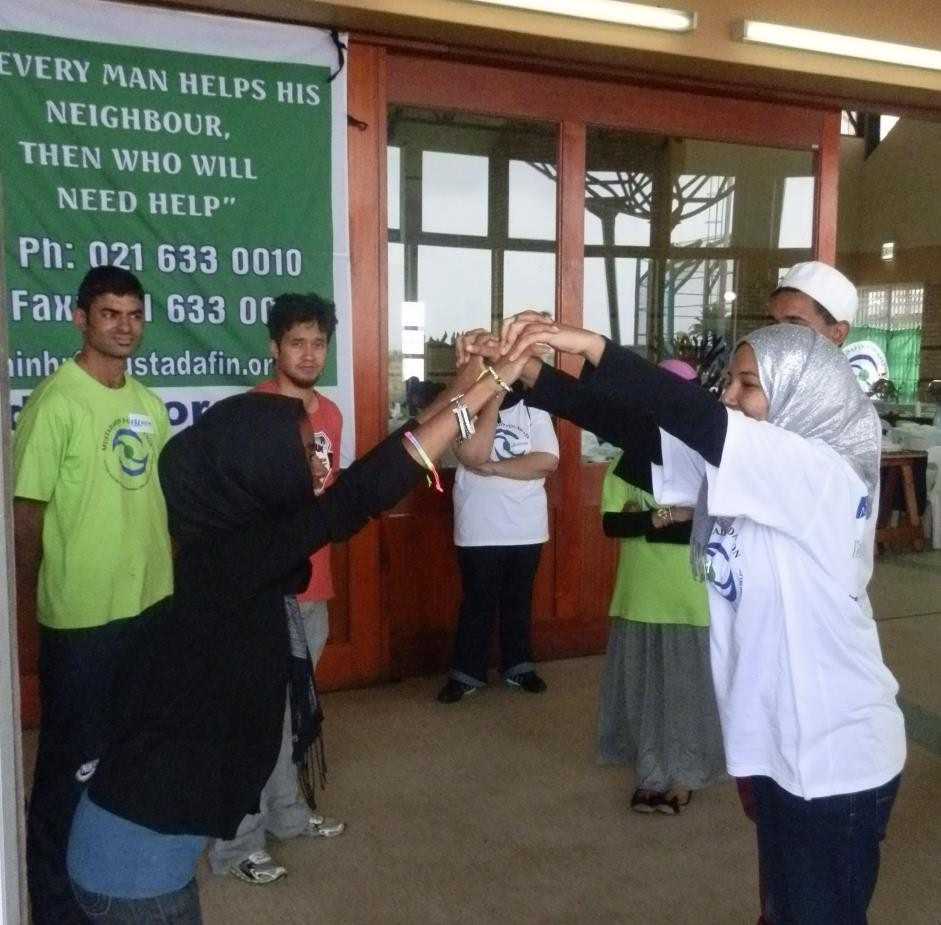
Caption: The Department of Basic Education recorded 20 000 school pregnancies in 2014, 223 of which were primary school learners.* To actively contribute to the fight against this concerning rise in teenage pregnancy in South Africa, Mustadafin Foundation launched a teenage pregnancy awareness campaign at its community centres in Tafelsig and Delft which will run during May 2015.
It is estimated that one in three girls in South Africa have given birth by the age of 20 and with the high rate of HIV infection, this concern has been intensified.* The latest national survey recorded 16% of pregnant women under the age of 20 tested HIV positive, not to mention other Sexually Transmitted Diseases (STDs).* It is also stated that this shocking number of teenage pregnancies are directly linked to gangsterism, coercion and substance abuse – a key discussion point in Mustadafin Foundation’s teenage pregnancy awareness programme.
Mustadafin Foundation launched its first teenage pregnancy awareness campaign on Tuesday, 12 May 2015 at its community centres in Tafelsig and Delft, which will run throughout the month. In addition to this campaign, these centres also run programmes that council women dealing with abuse, exploitation and oppression.
Anel Annandale, a psychologist based in Cape Town who works with children between the ages of two and 21, believes that teen moms are more likely to suffer from Post-Natal Depression because of the large amount of situational anxiety that they experience; leaving them with a feeling of isolation.**
“Education is pivotal when it comes to teenage pregnancy, especially to children who live in disadvantaged communities where they don’t have the necessary support structures at home,” says Ghairunisa Johnstone, Director at Mustadafin Foundation. The non-profit organisation has various health programmes that help educate community members about issues such as HIV/Aids, TB and other diseases.
“During our teenage pregnancy awareness campaign we will provide teenagers with sex education, teen development awareness, communication skills, lifestyle workshops and counselling,” explains Johnstone.
Salmah***, a single mother abandoned by her husband to raise her child alone has received tremendous amounts of help from Mustadafin Foundation. Although not a teenager, Salmah became all too familiar with the struggles one faces when adjusting to a new lifestyle; balancing work and her other responsibilities while experiencing Post-Natal Depression, hormonal imbalances and sleep deprivation.
Salmah admits that motherhood is difficult enough without having to fend for yourself and your baby as a result of being a single mother. “I don’t think that the youth are informed as to what the actual day-to-day challenges are when it comes to having children. They are not aware of what pregnancy does to your body, how it impacts your health, how it can contribute to chronic fatigue, how it becomes difficult to mentally focus on your work or studies when you can’t get enough sleep and how it affects relationships and the way we behave,” she explains.
“A sex education / awareness campaign for the youth is a priority in combating this problem and working towards prevention. In order to address teenage pregnancy holistically it is imperative to engage all stakeholders. When everyone understands their role at home, in the community and at school, it is possible to realise the desired change. In addition to community-based interventions, adolescent-friendly health services and access to information and support can help combat the high rise in teenage pregnancy. Prevention is better than cure. Female and male teenagers need to know the process and responsibility of being pregnant and raising a child, which is exactly what we are addressing in the awareness campaign,” concludes Johnstone.
Those interested in volunteering and assisting the youth, please contact Mustadafin Foundation on 021 633 0010. For more information on Mustadafin Foundation, visit www.mustadafin.org.za. Join their Facebook page at www.facebook.com/MustadafinFoundation
* http://www.hst.org.za/news/teenage-pregnancy-figures-cause-alarm
** http://www.iol.co.za/capeargus/zuma-s-teen-mom-suggestion-ludicrous-1.1830898#.VVLMRvmqpBc
*** Name has been changed to protect the woman’s identity
Argon Asset Management celebrates its tenth anniversary
Finance Minister Nhlanhla Nene congratulated Argon Asset Management as a firm leading transformation in the financial sector at its tenth year celebration in Johannesburg last Friday night.

CAPTION: Minister of Finance, Nhlanhla Nene gave a key-note address at Argon Asset Management’s ten year celebration. Nene said that Argon were “the embodiment of transformation” in the financial sector. Photographer: Monique De Paiva
In a key-note address Nene called for increased transformation. “It is important that more black fund managers make real strides in transforming the financial sector.”
“Transformation of the financial sector is an important part of Government’s vision,” said Nene who added that he knew he was “preaching to the converted” at Argon. “I salute and congratulate you on your achievements and wish you many more decades of success.” He said that wealth creation should not be reserved for the privileged few and called for transparent, fair and ethical behaviour among financial managers.
Treasury’s intention to transform the retirement industry was a priority, said Nene who raised concerns over the automatic default in South Africa to withdraw pension when changing jobs. “South Africans do not save sufficiently for retirement or for the long haul,” said Nene. He said that new, young, dynamic and transformed asset managers had a role to play in creating a financial market that is “more inclusive.”
Nene congratulated Argon on a “stream of accolades,” describing the firm as “the embodiment of transformation.” Argon won Best Investment Management Company in Africa at the Global Banking and Finance Review Awards in February this year and has been nominated in four of the 2015 Batseta Imbasa Yegolide Awards categories to be announced on 01 June 2015 (Best Equities Manager, Best Bond Manager, Best Absolute Return Manager and Most Responsible Investment Manager).
Ten years since its inception Argon now manages R27 billion in client assets. The firm which offers listed strategies in equities, fixed income and the multi-asset class is also expanding into the retail space. It also offers global strategies in association with its venerable global investment management partner, Schroders Investment Management.
Argon Chief Executive Officer and Co-founder Mothobi Seseli reflected on the past decade: “I had a vision of building a black owned and managed firm that could become a force for good in our country.” Seseli said that establishing Argon in an extremely competitive environment had not come easily. “It has been incredibly challenging to break down traditional barriers to entry however we have built a strong track record and worked really hard to achieve excellence for clients who have confidence in us,” said Seseli.
“Custodians of wealth should not be exclusive, as in the past. In fact, for meaningful change, they need to be more inclusive and representative of our society today,” said Seseli who emphasised the importance of upholding values of ethical behaviour and establishing trust relationships with clients.
The glittering celebration, with entertainment from artist Busisiwe Mawelele, was attended by Executive Chairman of Shell SA, Bonang Mohale and government officials including Deputy Minister of Public Service and Administration, Ayanda Dlodlo, Minister of Arts and Culture Nathi Mthethwa and Lesetja Kganyago, Governor of the South African Reserve Bank. Kganyago described Argon as an example of “global best practice” and said that the evening was a “celebration of black excellence.”
UN Women Executive Director and Former Deputy President, Dr Phumzile Mlambo-Ngcuka conveyed her best wishes to Argon. “Mothobi, you stand head and shoulders above your counterparts in the financial sector.” Michael Dobson, CEO of Schroders - Argon’s international partner which was founded in 1805 – congratulated Seseli on leading Argon through its first ten years. “We look forward to a long and successful relationship with Argon,” said Dobson.
For more information about Argon Asset Management, please contact 021 670 6570 or email info@argonasset.co.za or visit the website www.argonassetmanagement.co.za
Africa's first bottle-to-bottle plastic recycling plant opens its doors in Wadeville

The first Bottle-2-Bottle recycling plant in Africa, with an investment of R75 million and the capability to produce resin that will be suitable for the carbonated drink sector, was officially opened today by Minister of Environmental Affairs, Edna Molewa in Wadeville, Johannesburg. She was joined at the opening ceremony by notable guests from government and the PET industry including Therese Gearhart, President of Coca-Cola Southern Africa, the Joint Managing Director of Extrupet, Chandru Wadhwani and PETCO, the industry body for PET recycling in South Africa.
The plant, installed by Extrupet, is the first on the continent to use a Coca-Cola approved technology for carbonated soft drink bottles thus enabling the closure of the loop in the biggest sector in the beverage market.
The 3000m2 PhoenixPET plant, equipped with Starlinger technology, will supply an additional 14 000 tonnes of PET resin per year to the PET packaging industry. It will eventually divert an additional 22 000 tonnes of post-consumer PET bottles from landfills each year, reducing resource consumption, creating jobs and assisting industry in meeting its target of a 50% recycling rate for 2015.
Cheri Scholtz, PETCO CEO lauds the milestone for the PET industry and says, ‘PETCO and its shareholders are proud to congratulate Extrupet on the opening of the new plant. We believe it will benefit the local value chain and will ensure the long term viability of post-consumer PET recycling in South Africa’.
She adds, ‘The cooperation within the PET industry to reach a common goal of integrating recycling into product life cycles is showing very notable results: we have reached a point where 49% of all post-consumer PET bottles are currently recycled – no less than 1.5 billion bottles were recycled in 2014 supporting 44 000 informal income opportunities in PET collection’.
Wadhwani attributes the project’s success to their loyal customers, their shareholders continued commitment as well as the long standing relationship with PETCO and says that the facility has the capability to provide a level of quality assurance to meet the growing local and regional demand in the bottle and thermoforming industry for environmentally-friendly and sustainable packaging. ‘PhoenixPET is to be viewed as a bench-mark for other recycled polymers as well as packaging mediums aspiring to attain a cradle-to-cradle solution for sustainable packaging’.
The Chairman of PETCO and Franchise Technical Director of Coca-Cola Southern Africa, Casper Durandt concurs, ‘We are extremely excited about the fact that South Africa will be the first country on the continent to use rPET for Coca-Cola products. We have made every effort to ensure that we maintain the highest quality standards. We thank our partners in PETCO, who represent the full value chain: virgin resin manufacturing, converters, bottlers, brand owners and the retail sector, for ten years of sustained support that has brought us this far. We also thank Extrupet for a great partnership’.
With the Bottle-2-Bottle expansions, it is estimated that an additional 15 000* income opportunities will be created for the informal sector collecting additional material to supply the plant. This supports the green job creation goals entrenched in the National Waste Management Strategy and the Department of Science and Technology’s National Waste Research, Development and Innovation Roadmap.
For more information about the Bottle-2-Bottle initiative contact: Chandru Wadhwani at Extrupet on 011 865 8360.
* Figure based on the recovery opportunities created in collecting the additional 22 000 tonnes (with an average recovery of 1.45 tonnes of material per selective waste picker per year).
